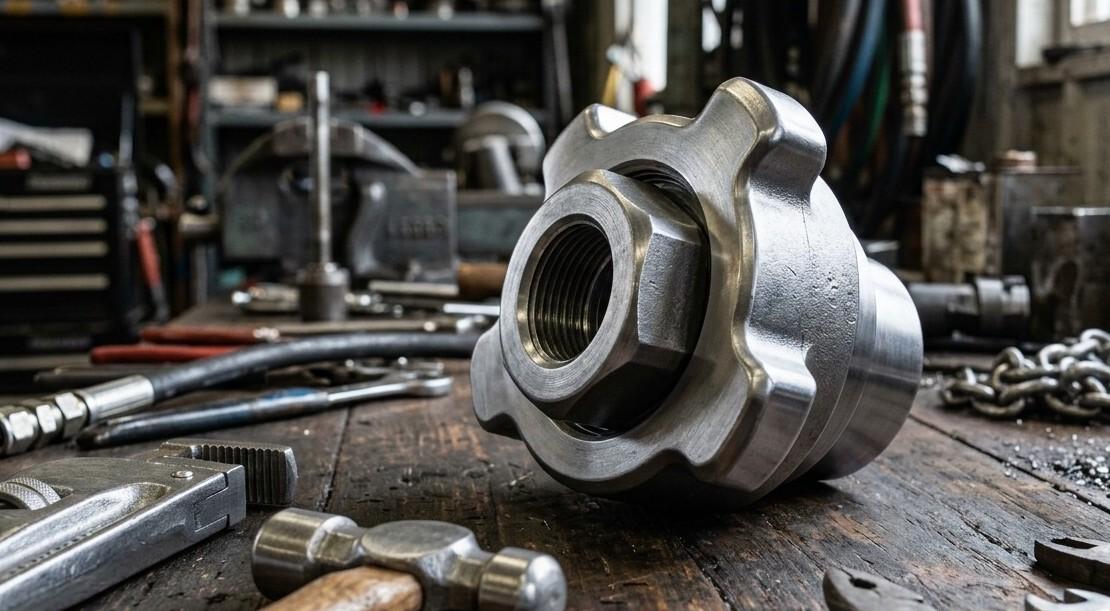
Hammer unions are high-pressure pipe fittings used to create secure, leak-resistant connections in industries that handle high-pressure fluids. They are widely used in oil and gas, drilling, well servicing, and other industrial applications because they allow pipelines and hoses to be connected or disconnected quickly while maintaining a reliable seal.
Choosing the right hammer union is important for safe and efficient operation. Factors such as the figure number, pressure rating, connection type, and sealing material all affect performance. This guide explains what hammer unions are, how they work, their main components, common applications, maintenance requirements, and how to select the right hammer union for your system.
What Is A Hammer Union?
A hammer union is a quick connect fitting used to join two sections of pipe or hose in high pressure environments. Unlike a bolted flange, a single hammer nut tightens or loosens the whole connection, which is where the name comes from.
Field crews rely on hammer unions because they save time. A connection that would take several minutes with a flange can be made in seconds with one.
Hammer Union Parts And Structure
Every hammer union is built from three core components, and each one plays a specific role in creating a secure, leak free joint.
- Hammer nut, the part struck to tighten or loosen the joint
- Male sub, the end that inserts into the female sub
- Seal ring, usually rubber or an elastomer, that sits between the subs to stop leaks
Some designs also include a swivel joint, which allows slight rotation once assembled. This helps on hose lines where a fixed angle would create stress on the fitting over time.
| Component | Typical Material | Function |
|---|---|---|
| Hammer Nut | Carbon or alloy steel | Locks the subs together |
| Male Sub | Carbon or alloy steel | Inserts into the female sub |
| Female Sub | Carbon or alloy steel | Receives the male sub |
| Seal Ring | Rubber or elastomer | Creates a leak-proof seal |
How A Hammer Union Works?
When the subs are pushed together, the hammer nut is threaded over the joint and tightened with a few solid strikes. This compresses the seal ring between the mating faces, creating the seal rather than the threads themselves. No wrench or torque tool is required, so crews can make or break a connection quickly.
Types Of Hammer Unions
Hammer unions are generally grouped by how they connect to the pipe or hose, and the right choice depends on how often that joint needs to be opened.
- Threaded, which screw onto pipe threads for quick assembly
- Welded, which join permanently for a high strength connection
- Blind, which cap off a line to isolate a section during testing
Beyond connection style, hammer unions also carry figure numbers that indicate their design and pressure class. Figures such as 100, 200, 206, 602, 1002 and 1502 are common, and each is matched to a specific pressure rating and size range. This same classification applies to other threaded and welded connectors, including Bothwell forged pipe fittings.
Pressure Ratings And Sizes
Manufacturers commonly use color coding on the hammer nut to help crews identify pressure ratings quickly. This is a helpful visual guide, but the stamped rating should always be the final word before installation. Seal material matters too, and for aggressive or high temperature lines many operators choose PTFE based sealing products instead of standard rubber.
| Color Code | Approximate Pressure Rating |
|---|---|
| Red | 3000 psi |
| Yellow | 5000 psi |
| Green | 10000 psi |
| Orange or White | 15000 psi and above |
Hammer unions typically range from 1 inch to 12 inch sizes, with standard service ratings reaching 20000 psi and sour service ratings up to around 15000 psi.
Where Hammer Unions Are Used?
Hammer unions show up throughout upstream oil and gas work, and once you know what to look for you will notice them on most high pressure equipment across a site.
- Drilling operations for drill pipe and drill collars
- Wellhead equipment such as Christmas trees and casing heads
- Manifold systems directing fluid between wells and equipment
- Flowback and well testing setups
- Pressure control equipment including blowout preventers
- Pipeline pigging and hydraulic fracturing lines
Outside oil and gas, hammer unions are also used in mining dewatering and geothermal drilling, where crews need the same fast, dependable connections under similar pressure conditions.
Sealing Performance And Common Problems
A hammer union is only as good as its seal, and most field failures trace back to a few avoidable mistakes rather than a defect in the fitting itself.
- Using low quality lubricant on the threads
- Misaligning the male and female subs before tightening
- Reusing a worn seal ring instead of replacing it
- Over tightening the hammer nut, which can damage the threads
- Skipping a visual inspection before each connection
Most of these problems are preventable with a short pre use check and proper lubrication, which extends the working life of the fitting and reduces unplanned downtime.
How To Select The Right Hammer Union?
Choosing the correct hammer union means matching the part to your system rather than picking the first one available. A few minutes spent checking specifications before ordering can save a crew a much longer delay later.
- Confirm the figure number matches your equipment
- Check the pressure rating against your system’s maximum working pressure
- Match the size to your pipe or hose diameter
- Choose threaded, welded or blind based on how often the joint breaks
- Consider sour service materials for H2S or CO2 lines
- Verify certification and traceability from your supplier
If sourcing hammer unions for a UAE project, a reliable hammer union supplier can help match figure numbers and pressure classes to your system before parts reach site. It is also worth comparing grooved fittings for lower pressure sections, since many operators mix connection types on one pipeline.
Maintenance Schedule
A simple routine keeps hammer unions performing reliably over their service life.
| Task | Recommended Frequency |
|---|---|
| Visual Inspection | Before every use |
| Thread Lubrication | Before every connection |
| Seal Ring Replacement | Every 3 to 5 cycles or on visible wear |
| Hydrostatic Pressure Test | Annually or after any repair |
Protective caps and a light coat of corrosion inhibiting oil also help prevent thread damage between jobs.
Conclusion
A hammer union may look like a small piece of hardware, but it plays a big role in keeping high pressure operations safe and efficient. Getting the figure number, pressure rating, size and connection type right from the start saves you from leaks, downtime and unnecessary repair costs.
Regular inspection, proper lubrication and timely seal replacement extend the life of every hammer union on your site. Pairing that routine with a trusted supplier and certified parts gives your crew one less thing to worry about.
To explore more industry focused guides, visit Mustafa Ashkar’s platform. For product inquiries or help selecting the right fitting for your project, please contact our team through the Contact Page.
Keep Reading to Know More
- JIS Flanges vs ANSI Flanges: Key Differences: Comparing global flange standards for performance, compatibility, and industrial applications.
- GI Pipes vs UPVC Pipes: Which Is Better for Water Supply?: Compare GI and uPVC pipes to find the best solution for safe, durable water supply.
- What Are GI Pipes? Uses, Benefits and Applications Explained: A complete guide to GI pipes covering uses, benefits, and real world applications
- Top Reasons to Choose BOTHWELL® for High‑Pressure Fittings: Engineered for extreme pressure, trusted for best performance.
- Why LUDECKE is a Trusted Brand in UAE Construction Industry: Trusted excellence in UAE construction materials.