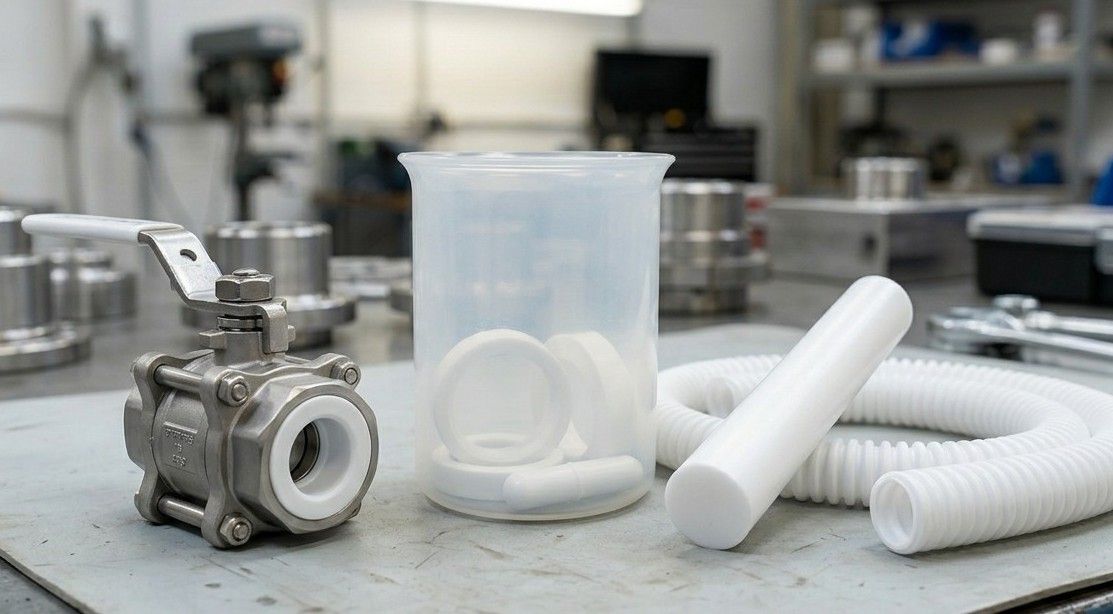
PTFE or Polytetrafluoroethylene is one of the most dependable engineering polymers used across heavy industries in the United Arab Emirates. Known widely by the brand name Teflon this fluoropolymer offers a rare combination of chemical resistance low friction and thermal stability.
From oil and gas facilities to manufacturing plants in Dubai and Abu Dhabi PTFE products are chosen wherever equipment must perform under heavy pressure high heat or constant chemical exposure. This guide explains what PTFE is the common product types available and how each application supports industrial operations across the UAE.
What Is PTFE and Why It Matters in Industry
PTFE is a synthetic fluoropolymer made from carbon and fluorine atoms bonded so tightly that the material resists almost every common acid base and solvent.
It was discovered by Dr Roy Plunkett in 1938 and later commercialized under the trademark Teflon. This strong molecular bond gives PTFE its signature non stick surface and allows it to function in both extreme heat and extreme cold without losing structural integrity.
Engineers across the UAE rely on PTFE because it performs consistently in desert heat offshore platforms and chemical processing units where ordinary plastics tend to fail quickly.
Key Properties of PTFE
Before selecting a PTFE product it helps to understand the properties that make this polymer suitable for demanding environments. These properties remain stable across a wide operating range which is why PTFE is trusted in sectors that cannot tolerate material failure.
| Property | Typical Value |
|---|---|
| Melting Point | Around 327°C |
| Continuous Service Temperature | Up to 260°C |
| Minimum Service Temperature | As low as -200°C |
| Dielectric Constant | Around 2.1 |
| Coefficient of Friction | Among the lowest of any known solid |
| Chemical Resistance | Resists almost all acids, bases, and solvents |
A material with this profile is naturally suited to industries where heat chemical exposure and friction control are everyday concerns rather than occasional risks.
Common Types of PTFE Products
PTFE is manufactured into several product forms depending on the application. Each form retains the same core properties while being shaped for a specific engineering purpose.
- PTFE sheets and films used for gasket cutting and electrical insulation
- PTFE tubes and hoses used to transfer chemicals gases and fuels safely
- PTFE coated bolts fasteners and fittings used to reduce galling and seizure
- PTFE seals gaskets and O rings used inside valves pumps and compressors
- PTFE coatings applied to metal tooling machine parts and cookware
- PTFE rods and bushings used in bearings and sliding mechanical components
Working with an experienced PTFE products supplier such as Mustafa Ashkar Trading LLC makes it easier to source the correct grade and form for a specific project rather than relying on generic stock material that may not match the operating conditions on site.
Industrial Applications of PTFE in the UAE
The UAE economy depends heavily on sectors where PTFE products are already standard practice. Oil and gas remains the largest user given the constant exposure to crude hydrocarbons drilling fluids and saltwater along offshore platforms and refineries.
| Sector | Common PTFE Application |
|---|---|
| Oil and Gas | Valve seats, seals, and coated fasteners |
| Manufacturing | Non-stick tooling and machined component coatings |
| Construction | Expansion joints and waterproof membranes |
| Food Processing | Conveyor surfaces and food-safe linings |
| Electronics | Wire insulation and connector housings |
| Automotive | Gaskets, hoses, and engine seals |
Each of these sectors selects PTFE for the same underlying reason. The material keeps performing when temperature chemical exposure or constant friction would damage standard metal or rubber components within a short period.
Benefits of Using PTFE Products in Industrial Settings
Choosing PTFE over conventional materials brings measurable operational advantages for plant operators and procurement teams alike.
- Longer service life due to strong chemical and corrosion resistance
- Lower maintenance frequency since PTFE rarely needs added lubrication
- Reduced downtime because parts resist wear under repeated motion
- Stable performance across both high heat and freezing conditions
- Compliance with food medical and electrical safety requirements where needed
These benefits explain why PTFE products continue to replace older metal and rubber components across critical UAE industries.
How to Choose the Right PTFE Product
Selecting the correct PTFE product depends on the operating environment rather than the material name alone. Buyers should confirm the temperature range chemical exposure and mechanical load the part will face once installed.
- Check the continuous and peak temperature rating for the application
- Confirm chemical compatibility with the fluids or gases involved
- Match the friction and load requirements of any moving parts
- Request certification such as FDA or ISO compliance where relevant
- Ask the supplier for application specific guidance rather than a generic catalog match
A supplier with genuine engineering experience can usually recommend the right grade faster and more accurately than a standard online catalog search.
Conclusion
PTFE products remain one of the most reliable solutions for industries facing constant heat chemical exposure and friction. To explore more PTFE products and engineering solutions suited to UAE industries visit the Mustafa Ashkar Trading LLC website.
Selecting the right type and grade still depends on matching the product to the exact operating conditions it will face. For technical guidance or help choosing the right PTFE component please contact our team and we will be glad to assist you.
Keep Reading to Know More
- JIS Flanges vs ANSI Flanges: Key Differences: Comparing global flange standards for performance, compatibility, and industrial applications.
- GI Pipes vs UPVC Pipes: Which Is Better for Water Supply?: Compare GI and uPVC pipes to find the best solution for safe, durable water supply.
- What Are GI Pipes? Uses, Benefits and Applications Explained: A complete guide to GI pipes covering uses, benefits, and real world applications
- Top Reasons to Choose BOTHWELL® for High‑Pressure Fittings: Engineered for extreme pressure, trusted for best performance.
- Why LUDECKE is a Trusted Brand in UAE Construction Industry: Trusted excellence in UAE construction materials.