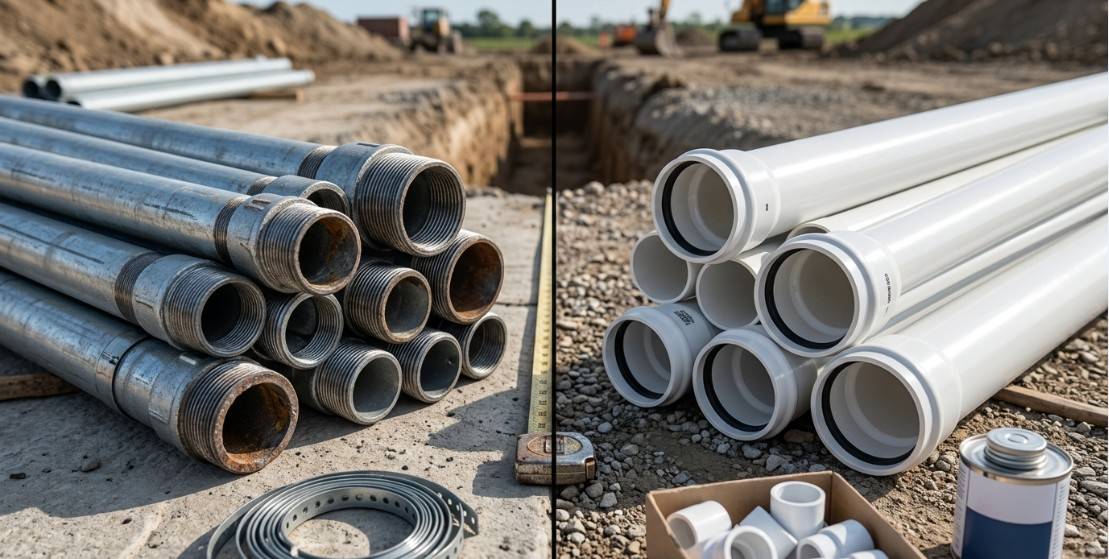
Water supply systems depend heavily on the type of piping material used. Two of the most common options are Galvanized Iron (GI) pipes and Unplasticized Polyvinyl Chloride (UPVC) pipes. Both are widely used in residential, commercial, and industrial plumbing, but they differ significantly in performance, durability, cost, and long term reliability.
This article provides a detailed, research based comparison to help you understand which pipe is better for modern water supply systems.
Understanding GI Pipes and UPVC Pipes
What are GI (Galvanized Iron) Pipes?
GI pipes are steel or iron pipes coated with a protective zinc layer to reduce corrosion. They are known for mechanical strength and have been widely used in plumbing, industrial systems, and structural applications.
Key Characteristics
- Strong and rigid metal structure
- Zinc coating provides initial corrosion resistance
- Suitable for high pressure applications
- Heavy and labor intensive to install
However, over time the zinc layer wears off, exposing the iron underneath to rust and internal scaling, especially in water distribution systems.
What are UPVC (Unplasticized Polyvinyl Chloride) Pipes?
UPVC pipes are rigid plastic pipes designed specifically for water supply systems. They are widely used in modern plumbing due to their durability and chemical stability.
Key Characteristics
- Non metallic and corrosion free
- Smooth internal surface improves water flow
- Lightweight and easy to install
- Non toxic and safe for drinking water systems
uPVC pipes are particularly popular in residential plumbing and long term water distribution networks.
Key Comparison: GI Pipes vs UPVC Pipes
Corrosion Resistance
GI Pipes
GI pipes are prone to corrosion once the zinc coating wears off. In humid or chemically active water conditions, rust formation begins internally, reducing lifespan and water quality.
UPVC Pipes
UPVC pipes are completely corrosion free since they do not contain metal. They do not rust or react with water, making them highly stable for long term use.
Key Insight: UPVC performs significantly better in water environments where corrosion risk is high.
Durability and Lifespan
GI Pipes
GI pipes typically have a moderate lifespan. In harsh water conditions, internal corrosion can reduce durability significantly, leading to leakage issues.
UPVC Pipes
UPVC pipes can last several decades with minimal maintenance. They are resistant to scaling, rust, and chemical damage, making them more reliable for long term infrastructure.
Case Insight: In many modern housing projects, UPVC systems are preferred due to lower maintenance costs over 20 to 30 years of use.
Water Quality and Hygiene
GI Pipes
GI pipes can affect water quality as rust particles may mix with water over time. They may also support bacterial buildup in older systems.
UPVC Pipes
UPVC pipes maintain water purity because they are non reactive and do not corrode or release contaminants.
Expert Angle: Water engineers often prefer UPVC for drinking water systems due to its inert and hygienic nature.
Installation and Maintenance
GI Pipes
- Heavy and difficult to handle
- Requires welding or threading
- Higher labor cost
- More maintenance due to rust and leakage risks
UPVC Pipes
- Lightweight and easy to install
- Solvent cement or push fit joints
- Faster installation
- Minimal maintenance required
Practical Insight: Installation of UPVC systems can significantly reduce project time and labor cost.
Cost Comparison
GI Pipes
- Higher initial material and installation cost
- Frequent maintenance increases lifetime cost
UPVC Pipes
- Lower initial cost
- Very low maintenance cost
Main Insight: UPVC is more cost effective over the full lifecycle, even if GI seems durable in the short term.
Pressure and Flow Performance
GI Pipes
Over time, rust and scaling reduce the internal diameter, lowering water flow and pressure efficiency.
UPVC Pipes
Smooth internal surfaces in uPVC systems, when combined with precision engineered pipe fittings, ensure consistent water pressure and minimize flow resistance across the pipeline.
Chemical and Environmental Resistance
GI Pipes
Susceptible to chemical reactions, especially in acidic or saline water environments.
UPVC Pipes
Highly resistant to chemicals, chlorine, and environmental conditions, making them suitable for diverse water sources.
GI Pipes vs UPVC Pipes Comparison Table
| Property | PTFE (Teflon) | Nylon | UHMW Polyethylene | Bronze (Metal) |
|---|---|---|---|---|
| Coefficient of Friction | Very Low | Low | Low | Medium |
| Self-Lubricating | Yes | No | Partial | No |
| Temperature Resistance | Up to 260°C | Up to 120°C | Up to 80°C | Very High |
| Chemical Resistance | Excellent | Moderate | Good | Poor (can corrode) |
| Wear Resistance | High | High | Very High | High |
| Load Capacity | Moderate | High | Moderate | Very High |
| Maintenance Required | Low | Medium | Medium | High |
| Cost | Higher | Moderate | Moderate | High |
Real World Application Breakdown
Residential Housing
UPVC is widely preferred for homes due to:
- Clean water delivery
- Low maintenance
- Easy installation in internal plumbing systems
Industrial Use
GI pipes are still used in some industrial applications where mechanical strength is required, but UPVC is increasingly replacing them in water distribution systems.
Urban Infrastructure
Modern municipal systems prefer UPVC because:
- Reduced leakage rates
- Lower long term repair costs
- Better water hygiene standards
Key Decision Factors
1. Water Type and Safety
- uPVC is best for drinking water because it is non toxic and does not react with water, ensuring long term hygiene.
- GI pipes may develop internal rust and scaling over time, which can affect water quality and taste.
2. Installation Environment
- uPVC pipes are ideal for indoor plumbing due to their lightweight nature and simple installation process.
- GI pipes are more suitable for outdoor or exposed areas where additional physical protection is required.
3. Strength Requirements
- GI pipes offer high mechanical strength and are better for heavy duty or high impact applications.
- uPVC pipes are suitable for normal residential pressure systems but not for extreme structural loads.
4. Corrosion and Maintenance
- uPVC is completely corrosion free, making it suitable for long term low maintenance systems.
- GI pipes are prone to rust and scaling, requiring regular inspection and maintenance.
5. Temperature Suitability
- GI pipes can handle higher temperature conditions and are more heat resistant than plastic pipes.
- uPVC pipes are suitable only for cold or normal water supply and should not be used for hot water lines.
6. Cost Efficiency
- uPVC pipes offer lower overall lifecycle cost due to easy installation and minimal maintenance.
- GI pipes become more expensive over time due to corrosion treatment and repair needs
Investing in durable pipes along with reliable installation materials can significantly reduce maintenance costs and improve the overall lifespan of your water supply system. .
7. Application Suitability
- uPVC is best for residential plumbing, drinking water systems, and municipal supply networks.
- GI pipes are preferred for industrial use, outdoor pipelines, and structural applications.
8. Lifespan and Durability
- uPVC pipes provide long service life with stable performance in water supply systems.
- GI pipes have reduced lifespan in corrosive or moisture-rich environments due to rusting.
Expert Perspective Summary: GI Pipes vs UPVC Pipes
From a plumbing engineering perspective:
- GI pipes are considered traditional but maintenance heavy
- UPVC pipes are considered modern, efficient, and cost optimized
Industry trends show a clear shift toward UPVC systems due to:
- Longer service life
- Lower operational cost
- Better water quality performance
AI Overview
GI pipes vs uPVC pipes comparison covering durability, cost, corrosion resistance, and applications to help choose the best pipe for water supply systems and long term plumbing performance.
FAQs
What is the best material for water supply pipes?
UPVC is widely considered the best for water supply due to its corrosion resistance and ability to maintain clean water quality.
Is GI pipe stronger than PVC?
Yes, GI pipes are mechanically stronger and better suited for high pressure or external impact conditions.
What is the disadvantage of GI pipe?
The main disadvantage of GI pipes is their tendency to rust and develop internal scaling over time.
Which pipe is good for water supply?
UPVC pipes are generally the better choice for modern water supply systems due to hygiene and durability.
Conclusion
Choosing between GI pipes and UPVC pipes depends on your specific application, but for most modern water supply systems, UPVC clearly offers better performance. It provides corrosion free operation, maintains water quality, reduces maintenance, and delivers long term cost efficiency, making it ideal for residential and municipal plumbing.
GI pipes still have value in environments where high strength, durability, and external protection are required. However, their susceptibility to rust and higher maintenance needs make them less suitable for long term drinking water systems.
Ready to Choose the Right Pipes?
For high quality GI pipes and uPVC piping solutions, expert advice, and dependable supply, Mustafa Ashqar Trading LLC offers a trusted range of products built for durability and performance.
Contact our GI pipes specialists to find the right piping solutions for your project needs.
Keep Reading to Know More
- What Are GI Pipes? Uses, Benefits and Applications Explained: A complete guide to GI pipes covering uses, benefits, and real world applications
- Top Reasons to Choose BOTHWELL® for High‑Pressure Fittings: Engineered for extreme pressure, trusted for best performance.
- Why LUDECKE is a Trusted Brand in UAE Construction Industry: Trusted excellence in UAE construction materials.
- Top Pipe Fittings Used in UAE Industrial Piping Systems: Reliable and high-performance pipe fittings for UAE industrial projects
- What Is a Hose? Different Types & Applications: Discover hose types, functions, and applications for reliable industrial and commercial fluid transfer.