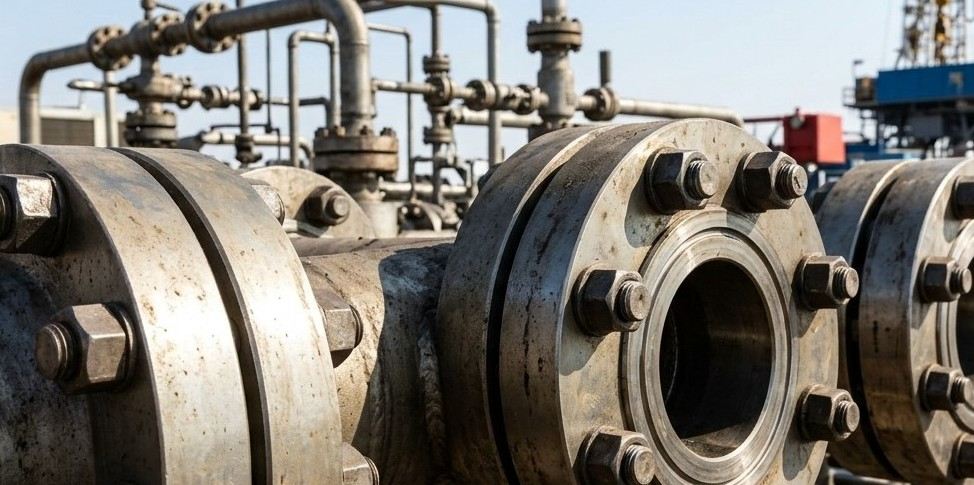
Flanges hold together some of the most demanding piping systems in the world. In oil and gas operations across the UAE and wider GCC region, a flange is not just a connector. It is part of the pressure boundary that keeps hydrocarbons contained safely under extreme conditions.
Choosing the wrong flange can lead to leaks, unplanned shutdowns or serious safety incidents. This guide walks through the practical factors engineers and buyers should review before finalizing a flange specification for high pressure oil and gas service.
Why Flange Selection Affects Pipeline Safety
Every flange sits at a joint where pressure, temperature and corrosive media meet a bolted connection. If the type, material or pressure class does not match actual operating conditions, the joint becomes the weakest point in the system.
Poor selection often shows up later as gasket blowouts, bolt fatigue or crevice corrosion. Many of these failures trace back to the installation stage rather than the flange itself, which is why proper handling and torque sequencing matter just as much as the initial spec. A closer look at common pipe fitting failures shows how small oversights during fit up create long term reliability problems.
Standards That Govern High Pressure Flanges
Flange dimensions, pressure ratings and materials are controlled by internationally recognized standards. Getting the standard right is the first step in choosing the correct flange.
ASME B16.5 covers flanges from half an inch through 24 inches, while ASME B16.47 covers larger diameters up to 60 inches. For upstream wellhead and Christmas tree equipment, API 6A flanges are used, with ratings that can reach 20000 psi. Projects that reference DIN, JIS or BS standards need extra care because bolt circles and facing dimensions are not interchangeable across systems.
Engineers working across multiple regions often need to compare standards side by side. A detailed breakdown of JIS and ANSI flange standards explains how these systems differ and why mixing them on the same line causes fit up problems.
Flange Types for High Pressure Service
Different flange types perform differently once pressure and temperature rise. Weld neck flanges dominate high pressure service because their tapered hub spreads stress evenly into the pipe wall. Slip on flanges are easier to install but are better suited to lower pressure utility lines.
| Flange Type | Best Suited For | Pressure Suitability |
|---|---|---|
| Weld Neck | Process headers, wellhead piping, refinery lines | High, Class 600 to 2500 |
| Slip On | Utility lines, low-pressure tie-ins | Low to moderate, Class 150 to 300 |
| Blind | Line isolation and pressure testing | All classes |
| Socket Weld | Small-bore instrument lines | Moderate to high |
| Threaded | Non-welded utility service | Low, non-cyclic only |
| Lap Joint | Frequent dismantling, corrosive stub ends | Moderate |
For a full comparison of how each type behaves under real operating loads, the guide on different types of flanges and their uses is a useful reference before finalizing a spec.
Material Selection for Corrosive and High Temperature Service
Material choice depends on the fluid being carried, ambient exposure and operating temperature. Offshore platforms in the Arabian Gulf face chlorides, humidity and thermal cycling that inland facilities rarely experience at the same intensity.
| Material | Key Property | Typical Application |
|---|---|---|
| Carbon Steel A105 | Cost effective, good strength | Standard process lines with corrosion protection |
| Stainless Steel 316L | Moderate corrosion resistance | Offshore and chemical processing |
| Duplex Stainless Steel | High chloride resistance | Seawater and marine exposure |
| Alloy Steel F11/F22 | High-temperature strength | Refining and petrochemical plants |
| Nickel Alloys | Extreme corrosion resistance | Sour service and aggressive media |
Selecting a higher grade material upfront usually costs less over the life of the pipeline than dealing with repeat corrosion failures.
Facing Type and Sealing Reliability
Flange facing determines how the gasket seals against pressure. Raised face is the standard choice across most ASME B16.5 applications and pairs well with spiral wound gaskets. Ring type joint facing uses a metal ring seal and is reserved for the highest pressure and temperature combinations, commonly Class 900 and above.
Flat face flanges are used only when mating to brittle equipment such as cast iron valves, since a raised face against a brittle component risks cracking it.
Matching facing to gasket type is not optional. A raised face flange fitted with the wrong gasket geometry will leak regardless of how well the bolts are torqued.
Installation and Maintenance Considerations
Even a correctly specified flange fails if installation is rushed. Bolt torque must be applied in a cross pattern across several passes rather than tightened side by side, which prevents uneven gasket compression. Sealing surfaces need to be clean and free of debris before assembly.
Routine inspection during shutdowns catches early signs of bolt relaxation or gasket wear before they turn into leaks. A step by step breakdown of flange installation best practices covers bolt grade checks, gasket selection and torque sequencing in more detail.
Common Mistakes to Avoid
Buyers and engineers repeatedly run into the same avoidable issues.
- Selecting flange type based on habit instead of actual pressure and temperature data
- Mixing standards such as ASME and DIN drilling patterns on the same line
- Ignoring gasket compatibility with the chosen facing
- Choosing the lowest upfront cost while ignoring lifecycle maintenance expense
- Skipping material verification through mill test certificates
Reviewing these points early in the procurement process saves significant rework later.
Working With the Right Flange Supplier
Once the technical specification is clear, sourcing from a supplier with proper documentation, material traceability and stock depth becomes the next priority. Buyers in the UAE looking for verified flange suppliers in UAE should confirm heat numbers, material certificates and compliance with the required standard before placing an order.
Final Thoughts
Choosing the right flange for high pressure oil and gas service comes down to matching type, material, facing and pressure class to actual operating conditions rather than convenience. Getting each of these decisions right protects both safety and long term operational cost.
To explore more industry focused guides, visit Mustafa Ashkar’s platform. For product inquiries or help selecting the right flange for your project, please contact our team through the Contact Page.
Explore More Industrial Insights
If you want to deepen your understanding of industrial systems and engineering components, explore these related articles:
- Top 10 Signs It Is Time for a Pipe Replacement – Spot the early warning signs before a pipe failure disrupts your project.
- 8 Coupling Mistakes That Could Cost You And How To Avoid Them – Common coupling errors that lead to leaks, downtime and costly rework.
- Hammer Unions A Complete Guide to Applications and Features – Understand how hammer unions are used across high pressure hose connections.
- Industrial Gaskets Explained: Materials, Uses, and Benefits – A breakdown of gasket materials and how to match them to your sealing needs.
- 7 Simple Tricks to Extend the Lifespan of Your Pipes – Practical maintenance habits that keep piping systems running longer.