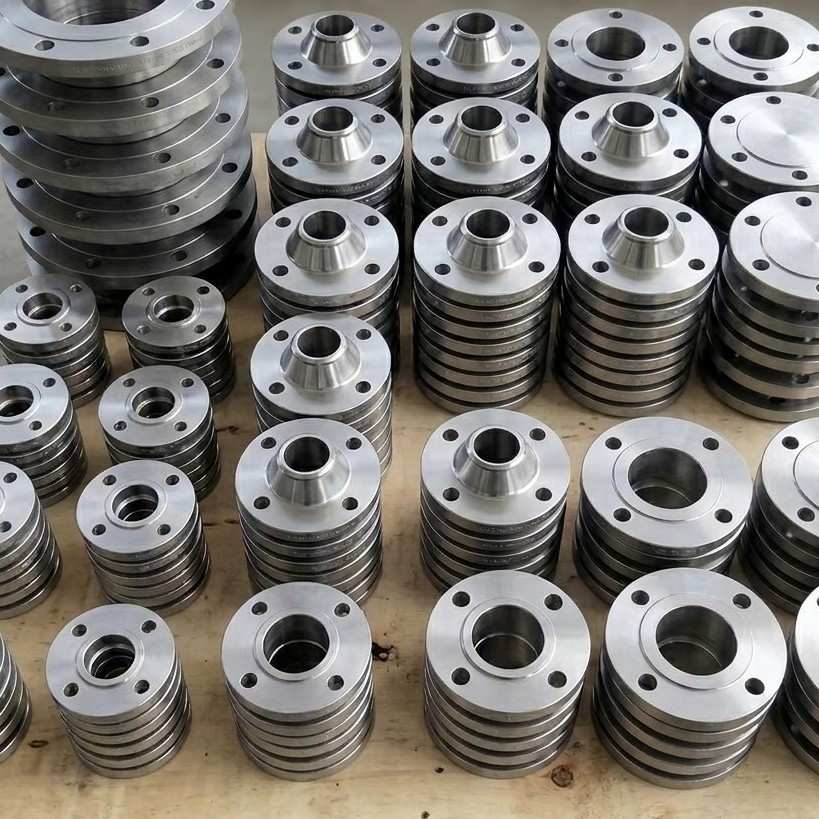
Flanges are critical mechanical components used to connect pipes, valves, pumps, and pressure equipment in industrial piping systems. Among the most widely used standards globally are JIS (Japanese Industrial Standards) and ANSI (American National Standards Institute, commonly ASME B16.5).
These two flange systems are designed for different engineering philosophies, measurement systems, and regional industries. Understanding their differences is essential for ensuring system compatibility, safety, and long term operational efficiency in oil and gas, marine, water treatment, and industrial construction projects.
What Are JIS Flanges?
JIS flanges follow Japanese Industrial Standards, specifically JIS B2220. They are widely used in Japan, South Korea, and Asian industrial projects.
JIS flanges include different variants such as JIS blind flange, JIS slip on flange, JIS socket weld flange, JIS threaded flange, and JIS weld neck flange, each designed for specific pressure requirements and piping applications.
Key characteristics include:
- Metric-based dimensions in millimeters
- Pressure ratings defined in K-class (5K, 10K, 16K, 20K, 30K, 40K)
- Compact flange design with smaller bolt circles
- Common use in marine, water systems, and general industrial piping
Industry references confirm that JIS 10K is often comparable to ASME Class 150 in pressure performance under similar conditions.
What Are ANSI Flanges?
ANSI flanges are based on ASME B16.5 standards and are widely used in North America and global industrial systems.
Key characteristics include:
- Imperial measurement system in inches
- Pressure classes such as Class 150, 300, 600, 900, 1500, 2500
- Larger bolt circle diameter compared to JIS
- Higher global compatibility in oil and gas industries
ANSI flanges dominate international petrochemical and energy sectors due to standardized global adoption and higher pressure class range.
Key Differences Between JIS Flanges and ANSI Flanges
Dimensional and Structural Variations
One of the most important aspects in engineering selection is dimensional standards. Even small differences in diameter or bolt circle can lead to installation failure.
dimensional standards in JIS and ANSI systems differ significantly in bolt hole spacing, flange thickness, and face geometry, making direct substitution unsafe.
Dimensional mismatches become especially critical in large scale industrial projects, which is why procurement teams often rely on a verified JIS flanges supplier UAE to avoid compatibility issues during installation and maintenance phases.
Pressure Handling Capacity
Another major consideration is pressure rating, which determines how much internal force a flange can safely withstand during operation.
pressure rating classifications in ANSI systems often use class ratings such as 150, 300, and 600, while JIS uses pressure units like 5K, 10K, and 20K, creating confusion in cross system applications.
Bolt Configuration Differences
Bolt arrangement plays a key role in assembly strength and sealing efficiency. Engineers must carefully match flange designs to avoid misalignment.
bolt pattern differences between JIS and ANSI are not interchangeable, even when nominal pipe sizes appear similar, which can lead to leakage or structural stress if mismatched.
Technical Comparison Table
| Feature | JIS Flanges | ANSI Flanges |
|---|---|---|
| Standard Body | Japanese Industrial Standards | American National Standards Institute |
| Pressure Rating System | 5K, 10K, 16K, 20K | Class 150, 300, 600, 900 |
| Dimensional Basis | Metric-based system | Imperial-based system |
| Global Usage | Asia, Japan-origin equipment | Global oil & gas, international projects |
| Interchangeability | Not directly compatible with ANSI | Not directly compatible with JIS |
| Common Industries | Marine, manufacturing, HVAC | Petrochemical, oil & gas, power plants |
Material and Performance Considerations
Sealing and Operational Integrity
A critical function of flanges is maintaining leak proof connections under varying operating conditions. Surface finish and gasket compatibility play a direct role in performance.
sealing surface design differs between raised face, flat face, and ring type joints, which influences gasket selection and long term sealing reliability.
Application Based Selection
Industrial usage varies widely depending on temperature, fluid type, and system pressure. Engineers must select flanges based on real world operating conditions.
industrial piping systems in oil refineries, chemical plants, and power stations often require ANSI standards due to global compatibility requirements.
Meanwhile, JIS systems are widely used in Asian manufacturing facilities and equipment imported from Japan.
Industry Specific Usage and Global Preferences
Oil, Gas, and Petrochemical Applications
Heavy duty industries demand high strength materials and strict compliance with global engineering codes.
petrochemical industry projects often prefer ANSI flanges due to standardized global sourcing and easier integration with international equipment suppliers.
Hydraulic and Fluid Transfer Systems
Hydraulic networks require precise sealing and consistent pressure handling across multiple connection points.
hydraulic systems rely heavily on compatibility between pumps, valves, and pipelines, making standard selection critical for system efficiency.
Material Grades and Engineering Reliability
Material selection directly impacts durability, corrosion resistance, and lifecycle performance of piping networks.
material grade selection includes carbon steel, stainless steel, and alloy-based options depending on environmental exposure and fluid characteristics.
Incorrect material selection can lead to corrosion failure, especially in marine or chemical environments.
Compatibility Challenges in Global Projects
Engineering Mismatch Risks
One of the most common issues in international projects is mixing flange systems without proper conversion planning.
flange compatibility issues arise when JIS and ANSI components are joined without adapters or proper redesign, often leading to leakage or mechanical failure.
Design Standardization
Engineering teams must follow unified design codes to ensure system reliability across global supply chains.
piping design strategies should always account for pressure, temperature, and mechanical load variations before selecting flange systems.
Temperature and Environmental Constraints
Operating conditions play a crucial role in flange selection, especially in high heat or cryogenic applications.
temperature resistance varies depending on material composition and manufacturing standards, making it essential to match flanges with operational environments.
ANSI systems often provide broader classification ranges, while JIS systems are optimized for specific industrial applications in Asia.
Why JIS and ANSI Flanges Cannot Be Mixed
Mixing these systems leads to mechanical failure risks due to:
- Misaligned bolt holes
- Incorrect gasket compression
- Uneven pressure distribution
- Leakage under high pressure conditions
Engineering studies confirm that even if nominal pipe size matches, flange geometry differences prevent safe direct connection.
Key Selection Guidelines
Choose JIS Flanges When
- Working with Japanese machinery
- Designing marine or HVAC systems in Asia
- Projects follow metric engineering standards
Choose ANSI Flanges When
- Working in oil and gas or petrochemical sectors
- Projects require global standardization
- High pressure systems are involved
Conclusion
JIS and ANSI flanges differ mainly in measurement systems, pressure ratings, bolt patterns, and regional application standards, making proper selection essential for safe and compatible piping system design.
Get Expert Support for Flange and Industrial Piping Solutions
For reliable piping systems that meet international standards, choosing the right flanges supplier is essential for safety and long term performance. Mustafa Ashqar Trading LLC provides high quality industrial piping solutions, including flanges, fittings, and accessories designed for demanding applications.
If you are planning a new project or upgrading an existing piping system, contact Mustafa Ashqar Trading LLC today for expert guidance, dependable supply, and customized piping solutions tailored to your engineering requirements.
Keep Reading to Know More
- GI Pipes vs UPVC Pipes: Which Is Better for Water Supply?: Compare GI and uPVC pipes to find the best solution for safe, durable water supply.
- What Are GI Pipes? Uses, Benefits and Applications Explained: A complete guide to GI pipes covering uses, benefits, and real world applications
- Top Reasons to Choose BOTHWELL® for High‑Pressure Fittings: Engineered for extreme pressure, trusted for best performance.
- Why LUDECKE is a Trusted Brand in UAE Construction Industry: Trusted excellence in UAE construction materials.
- Top Pipe Fittings Used in UAE Industrial Piping Systems: Reliable and high-performance pipe fittings for UAE industrial projects