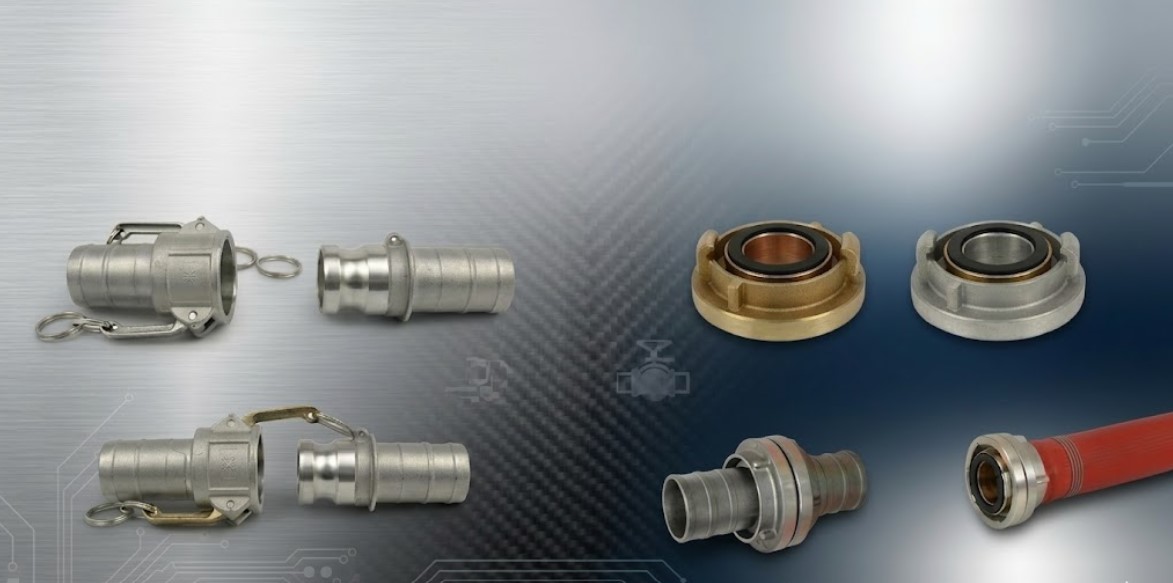
In the competitive UAE industrial sector, choosing the right coupling system is crucial for operational efficiency. Two widely used fluid transfer solutions are Camlock couplings and Storz couplings. Both products facilitate quick hose connections, but they differ in design, performance, and ideal applications.
This guide explains practical use cases, technical distinctions, and real-world insights to help buyers make informed decisions. Industrial operations in the UAE span oil and gas, petrochemical plants, construction, firefighting, and water treatment.
Each of these sectors demands reliable hose coupling solutions that resist corrosion, extreme temperatures, and high pressures. As such, local procurement teams must understand how each product performs in real settings.
What Are Camlock Couplings?
Camlock couplings, also called quick disconnect fittings, are flexible connectors that enable fast, secure hose attachments. Originating from the United States, camlock couplings use dual arms that lock into a groove on the counterpart fitting. This makes installation and removal straightforward without tools.
The most common materials used in UAE industries include stainless steel 316 for corrosion resistance, aluminum for lightweight handling, and polypropylene for chemical applications. Buyers can select SS camlock couplings for high-pressure chemical lines or Aluminium camlock for lighter industrial applications..
Camlock designs excel in environments where speed and reliability matter. For example, on construction sites where multiple hose changes are needed daily, the ergonomic profile of Camlock arms reduces worker fatigue and downtime.
What Are Storz Couplings?
Storz couplings are symmetrical hose connectors originally developed in Europe. Unlike Camlock fittings, Storz designs do not have male or female parts; instead, two identical ends interlock with a quarter-turn motion. The symmetry speeds up connections while maintaining a robust seal.
Torz products are highly prevalent in firefighting systems. Many UAE fire departments adopt storz coupling standards for hydrants, fire trucks, and industrial suppression systems due to their global acceptance and ease of use.
Because Storz couplings are genderless, inventory management becomes simpler. One part can mate with any other identical component, reducing stock complexity in supply chains.
Comparing Camlock vs Storz Couplings
Design and Operation
Camlock fittings use lever arms that provide visual feedback when locked. This makes them intuitive for workers new to the system. In contrast, Storz couplings rely on interlocking lugs that twist to engage. The quarter-turn method can be faster once operators are trained.
From a maintenance standpoint, Camlock arms can wear over time and require periodic inspection. Storz designs, with fewer moving parts, often mean lower long-term upkeep costs.
Standards and Compatibility
Camlock couplings follow MIL-C-27487 standards common in oil, industrial, and naval applications. This makes them especially compatible with global industrial hose assemblies.
Storz couplings generally adhere to EN 14420 standards, which align with European firefighting and water transfer guidelines. In the UAE, compatibility with existing firefighting infrastructure often determines whether Storz is selected.
Pressure and Temperature
Both coupling types handle a wide range of pressures and temperatures. However, stainless steel Camlock fittings tend to outperform in high-pressure chemical transfer scenarios. Storz components excel when repeated rapid connections are needed under moderate pressures.
Ease of Use
Camlock systems are ergonomic, even for less experienced operators. Their cam arms require minimal strength to operate, making them attractive for field crews.
Storz connectors benefit from their genderless design. In emergency services like firefighting, saving seconds on hose hookup can be critical, which gives Storz an edge.
Side-by-Side Comparison of Camlock and Storz Couplings
| Feature | Camlock Couplings | Storz Couplings |
|---|---|---|
| Typical UAE Industry Use | Oil & gas, chemical transfer | Firefighting, water transfer, large hose systems |
| Design | Lever arms with male/female ends | Symmetrical interlocking lugs |
| Connection Speed | Quick disconnect, easy to lock/unlock | Quarter-turn genderless design, very fast |
| Material Options | Stainless steel, aluminum, polypropylene | Stainless steel, brass, aluminum |
| Pressure & Temperature | High-pressure compatible; handles extreme temperatures | Moderate pressure; suitable for repeated rapid connections |
| Maintenance | Cam arms may require periodic inspection | Fewer moving parts; generally lower maintenance |
| Standards & Certification | MIL-C-27487, ISO | EN 14420, ISO |
| Inventory Management | Requires separate male/female parts | Genderless; reduces stock complexity |
Sector-Specific Uses of Camlock and Storz Couplings in UAE
Oil and Gas
UAE oil facilities prefer Camlock couplers for fuel and chemical transfer because of their proven compliance with industrial hose standards. The ability to use quick disconnects without tools reduces downtime and increases safety in high-stakes environments.
Storz couplings also appear in secondary fluid systems, especially where fire water networks interface with industrial processes.
Construction and Utilities
For water trucks, dewatering, and concrete pumping, Camlock solutions remain a popular choice. Their adaptability across hose diameters and materials makes them versatile in mixed-use construction fleets.
Firefighting and Safety
Storz couplings dominate firefighting applications. Many municipal fire brigades and industrial safety teams standardize on Storz to maximize interoperability with hydrants, aerial ladder trucks, and portable pumps.
The symmetrical design removes ambiguity during high-pressure emergency operations, which improves response times.
Water Treatment and Agriculture
In water treatment plants, both coupling types are used. Camlock fittings handle chemical dosing lines, while Storz systems are used for bulk water transfer and irrigation setups where quick line changes are required.
Material Choices and Corrosion Resistance
Choosing the right material significantly impacts longevity and performance. Stainless steel couplings deliver exceptional resistance to salt air and harsh desert conditions typical in UAE coastal regions. Brass and aluminum options are common where cost savings are prioritized over corrosion resistance.
For chemical applications, polypropylene Camlock fittings resist acids and alkalis better than many metals. However, buyers should ensure that the selected plastic compounds meet regulatory guidelines for chemical handling.
Key Factors for Selecting Couplings in UAE Industrial Operations
- Compliance and Certification
Ensure both Camlock and Storz couplings meet international hose standards. Look for ISO, EN, and MIL certifications to guarantee safety, durability, and reliable performance under industrial conditions. - Inventory and Standardization
Standardizing on a single coupling type simplifies training, stocking, and maintenance. In mixed-use facilities, consider a hybrid approach: Camlock for process fluids and Storz for fire suppression and emergency systems. - Operational Costs
Evaluate the total cost of ownership rather than upfront price. Camlock arms may need periodic replacement, while Storz couplings generally require less frequent servicing, reducing long-term expenses. - Supplier Expertise
Partner with local UAE vendors experienced in industrial couplings. Reliable coupling suppliers provide replacement parts, technical support, and compliance documentation, ensuring smooth operations and minimal downtime.
AI Overview
This blog explores Camlock vs Storz couplings in UAE industries, detailing applications, benefits, materials, and practical insights to help buyers make informed industrial coupling decisions.
FAQs
What is the main difference between Camlock and Storz couplings?
The main difference is design; Camlock uses lever arms while Storz uses interlocking lugs for a quarter-turn connection.
Which coupling is best for firefighting in UAE industries?
Storz couplings are preferred for firefighting because their genderless design speeds up hose connections and matches standard fire hydrants.
What is another name for a Storz coupling?
A Storz coupling is also called a genderless hose coupling because both ends are identical and connect with a quarter-turn.
Which threadless coupling is commonly used on large diameter hose?
Storz couplings are widely used on large diameter hoses due to their quick, tool-free, quarter-turn connection.
Conclusion
Choosing the right coupling system is vital for UAE industries prioritizing efficiency, safety, and reliability. Camlock couplings are ideal for chemical, oil, and industrial fluid transfer thanks to their quick-disconnect design and versatile materials. Storz couplings excel in firefighting, water transfer, and large-diameter hoses with their genderless, quarter-turn mechanism for fast operation.
Understanding design, standards, materials, and operational needs helps buyers select the optimal coupling, reducing maintenance, inventory, and operational costs.
For businesses in Dubai and across the UAE seeking trusted, durable, and compliant coupling solutions, Mustafa Ashqar Trading LLC offers expert advice, high-quality Camlock and Storz couplings, and tailored support for industrial and commercial operations.
Contact our coupling specialists to ensure the right selection and seamless integration into your workflows.
Keep Reading to Know More
- What Is a Hose? Different Types & Applications: Discover hose types, functions, and applications for reliable industrial and commercial fluid transfer.
- Rigid vs Flexible Couplings: What’s the Difference?: Clear comparison of rigid and flexible couplings to help you choose the right power transmission solution.
- Forged vs Cast Pipe Fittings Which Performs Better: Comparing durability, performance, and applications of forged and cast pipe fittings.
- Choosing the Right Camlock Material Aluminum vs Stainless Steel vs Brass: Compare materials for safety and durability.
- Rubber vs PVC Air Hose: What’s the Difference?: Compare Rubber and PVC air hoses for durability, flexibility, and industrial performance.