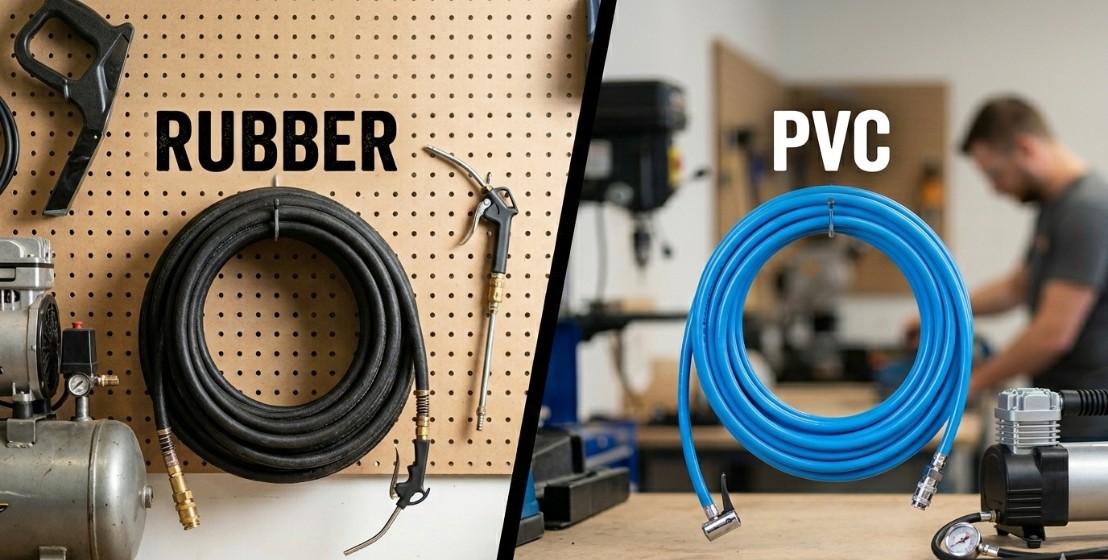
Choosing the right air hose is essential for workshop efficiency, industrial reliability, and safe operations in Dubai, UAE. But why is selecting the right material for air hoses crucial for workshops and construction sites? With so many options available, understanding the differences between rubber air hose and PVC air hose can save time, reduce maintenance issues, and optimize tool performance. This practical guide draws on real‑world insights and technical expertise to help engineers, contractors, and buyers make the right decision for their needs.
Air hoses are critical components in pneumatic systems, powering tools, compressors, and machinery. Yet materials matter. Whether you are outfitting a construction site in Abu Dhabi or a precision factory in Sharjah, the material you choose impacts flexibility, weather resistance, and overall lifecycle cost.
Material Fundamentals and Performance Characteristics
What Makes Rubber Air Hose Unique?
Rubber air hoses are known for their robustness and ability to withstand harsh conditions. Their flexible construction absorbs shock and resists abrasion, making them ideal for high‑traffic industrial environments.
In hot climates like the UAE, rubber hoses maintain pliability even under elevated temperatures, reducing the risk of kinks or cracks during heavy use. Rubber also excels in oil‑laden environments where tool grease and hydraulic fluids are common.
What are the key properties of PVC air hose?
PVC air hoses are lightweight and cost‑effective, often chosen for light to medium duty applications. Options like PVC light duty steel wire hose simplify coiling and transport across construction sites. Their rigid body lets them maintain shape well, which simplifies coiling and storage between jobs.
However, PVC becomes less flexible in lower temperatures and may crack if bent sharply. In typical UAE workshop temperatures, PVC performs well, but long‑term exposure to extreme heat can cause material fatigue.
What are the Key Differences Between Rubber and PVC Air Hose?
Understanding the tradeoffs between materials helps you match the hose to your specific application.
Flexibility and Handling
Rubber hoses retain flexibility in a wider temperature range, minimizing kinks under stress. This makes them preferable for dynamic work zones where movement and tool repositioning are frequent.
PVC hoses are lighter and easier to handle initially, ideal for portable tasks and occasional use. Their shape retention makes them easy to reel and store.
Durability and Wear Resistance
Rubber air hoses resist abrasion, chemicals, and repeated bending better than PVC. This durability translates to longer service life in heavy‑use industrial settings across UAE workshops and construction sites.
PVC hoses are suitable for lighter workloads but may wear faster under constant abrasion. For more demanding tasks, reinforced versions like PVC heavy duty steel wire hose provide extended life and improved resistance.
Weight and Portability
PVC hoses are significantly lighter, making them easier to transport between job sites or around a business floor. This weight advantage suits mobile mechanics, technicians, and home users.
Rubber hoses are heavier but deliver superior stability and resistance, especially when attached to heavy pneumatic tools. For fixed installations or continuous use, this stability can reduce fatigue and improve safety.
Pressure Ratings and Safety
Rubber hoses typically handle higher working pressures, making them suitable for powerful compressors and heavy pneumatic tools. Higher burst ratings enhance safety in demanding industrial operations.
PVC hoses are often rated for lower pressure use, fitting most DIY and light professional environments. For intermittent tasks with smaller compressors, PVC delivers adequate performance.
Rubber Air Hose vs PVC Air Hose Comparison
| Feature | Rubber Air Hose | PVC Air Hose |
|---|---|---|
| Flexibility | High flexibility even in extreme temperatures common in Dubai and UAE | Less flexible; can become brittle under prolonged heat exposure |
| Durability | Excellent abrasion, chemical, and UV resistance | Moderate; prone to wear and cracking under heavy use or sunlight |
| Weight | Heavier; provides stability with heavy pneumatic tools | Lightweight; easier to transport and coil for mobile tasks |
| Pressure Rating | Higher working and burst pressures suitable for industrial compressors | Lower pressure rating; fits light to medium-duty applications |
| Maintenance | Requires periodic inspection, minimal risk of cracking | Needs careful handling to avoid sharp bends and cracking |
| Temperature Resistance | Performs well under UAE high temperatures | Can stiffen or degrade under extreme heat over time |
| Best Applications | Heavy-duty workshops, construction sites, industrial factories | Light-duty workshops, portable tasks, DIY, mobile technicians |
| Cost | Higher upfront cost but longer service life | Lower initial cost; may require replacement sooner in harsh conditions |
Application Scenarios & Best Use Cases in Dubai and UAE
Industrial Workshops and Factories
In UAE industrial environments where air tools run for extended periods each day, rubber air hose excels due to strength and longevity. Rubber’s superior wear resistance supports continuous production and reduces replacement costs.
Construction Sites and Outdoor Jobs
For outdoor construction tasks in Dubai, Abu Dhabi, or Sharjah, rubber hoses resist abrasion from concrete dust and debris. Their flexibility also accommodates rough terrain without compromising performance.
Light Duty and Home‑Based Use
PVC hoses are practical for hobbyists, light shop work, and occasional air tool use. Their lower cost and ease of handling make them appealing for small businesses and DIYers.
Mobile Technicians and Portable Applications
When portability matters, PVC’s lightweight nature simplifies transit between sites. Smaller diameter PVC hoses are easy to coil, store, and maneuver during quick repair jobs.
Maintenance Considerations and Lifecycle Costs
Rubber Air Hose Maintenance
Rubber hoses resist cracking and endure frequent flexing, but they still require periodic inspection. Look for signs of wear, soft spots, and surface degradation to avoid failures that interrupt workflow.
Keeping hoses clean from oil, grit, and chemicals extends life. Proper storage off hot surfaces and away from UV exposure in outdoor UAE conditions also protects material integrity.
PVC Air Hose Upkeep
PVC hoses demand careful handling to avoid sharp bends that can lead to cracking. Regular checks for brittleness and leaks help maintain performance.
Because PVC may age faster under frequent use, preparing to replace hoses at regular intervals ensures operational continuity, especially in busy workshops.
Cost Comparison and Value Over Time
Rubber air hoses typically cost more upfront but deliver longer service life in demanding environments. Reducing replacements and downtime often makes them more cost‑effective in heavy industrial scenarios.
PVC hoses offer lower initial costs, appealing when budgets are tight or usage is intermittent. However, in high‑cycle environments, total cost of ownership may rise due to earlier replacement needs.
How to Choose the Right Hose for Your Needs?
Selecting a hose depends on workload intensity, environment, and expected lifespan. For heavy duty applications, high pressure demands, and continuous use, rubber hoses provide unmatched resilience.
For light to medium tasks and scenarios where weight and portability matter, PVC hoses deliver efficient performance at a lower price. Evaluating your tools, usage frequency, and climate exposure will guide the right choice.
Safety and Compliance
Ensure air hoses meet regional safety standards and pressure ratings specified by ISO, ANSI, or local UAE regulations. Verifying compliance helps prevent workplace accidents and supports insurance requirements for industrial facilities.
Regular testing and documentation of hose performance in maintenance logs also strengthens quality management systems and operational safety audits.
Innovations and Material Advances
Modern hybrid hoses blend features of rubber and PVC to strike a balance between flexibility and weight. Heat‑resistant options, such as PVC heat resistant steel wire hose, ensure safe performance under high UAE temperatures in industrial and construction applications.
These engineered variations expand options for buyers seeking customized performance without sacrificing durability or portability.
AI Overview
This blog explains how to choose between rubber vs PVC air hoses, highlighting differences in durability, flexibility, and performance for Dubai UAE industrial and construction needs.
FAQs
What are the main differences between rubber and PVC air hose?
Rubber hoses offer superior flexibility, durability, and high pressure performance. PVC hoses are lighter, more cost-effective, and suitable for light to medium-duty tasks.
Is a rubber air hose better for UAE workshop conditions?
Yes, rubber hoses resist high temperatures, UV exposure, and abrasion common in Dubai and UAE industrial environments. They maintain flexibility and longevity under harsh conditions.
Can PVC air hoses handle heavy pneumatic tools?
PVC hoses are best for light to moderate pressure tools and intermittent use. For heavy-duty compressors or continuous use, rubber hoses are recommended.
How should I maintain my air hose for longevity in Dubai and UAE?
Inspect hoses regularly for cracks, leaks, and wear, and store them away from direct sunlight. Cleaning after use prevents sand, dust, and chemicals from degrading the material.
Key Takeaways
Choosing between rubber vs PVC air hoses depends on workload, environment, and tool requirements. Rubber hoses offer superior durability, flexibility, and high-pressure handling, making them ideal for heavy-duty workshops, construction sites, and industrial operations across Dubai and UAE. PVC hoses are lighter, cost-effective, and suitable for light-duty tasks, portable applications, or occasional use.
For businesses seeking reliable, durable, and compliant fluid transfer solutions in Dubai and UAE, Mustafa Ashqar Trading LLC provides expert guidance, high-quality industrial air hoses, and tailored support for all commercial and industrial applications.
Contact our industrial hose specialists for professional selection advice, compliance insights, and customized hose solutions for your operations.
Keep Reading to Know More
- What Is a Hose? Different Types & Applications: Discover hose types, functions, and applications for reliable industrial and commercial fluid transfer.
- Rigid vs Flexible Couplings: What’s the Difference?: Clear comparison of rigid and flexible couplings to help you choose the right power transmission solution.
- Forged vs Cast Pipe Fittings Which Performs Better: Comparing durability, performance, and applications of forged and cast pipe fittings.
- Choosing the Right Camlock Material Aluminum vs Stainless Steel vs Brass: Compare materials for safety and durability.
- Difference Between EPDM and Natural Rubber Sheets: Key differences in performance and use.