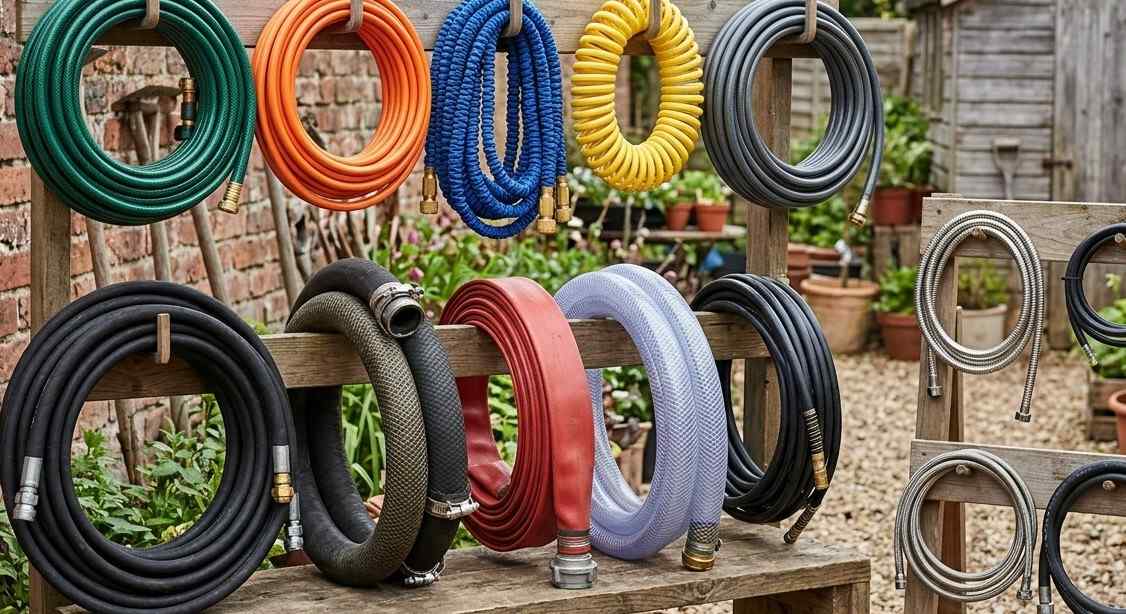
Choosing the right hose is essential for safe fluid transfer, reliable equipment performance, and longer service life. Whether you need a hydraulic hose, industrial hose, air hose, water hose, or chemical hose, selecting the wrong type can cause leakage, pressure failure, abrasion, or premature replacement.
The best hose depends on several factors, including the fluid being transferred, operating pressure, temperature, hose size, flexibility, and installation environment. This guide explains the key factors to consider when choosing the right hose for your application.
1. Identify the Fluid Being Transferred
The first step is determining what will flow through the hose. Water, hydraulic oil, compressed air, chemicals, fuel, steam, and other fluids can require completely different hose materials.
For example, hydraulic applications commonly use hoses designed to withstand high pressure and oil exposure. Chemical transfer applications require hoses with suitable chemical resistance, while food and beverage applications may require specially approved hose materials.
Always check the manufacturer’s chemical compatibility information before selecting a hose.
2. Check the Required Working Pressure
Pressure rating is one of the most important hose specifications. A hose must have a working pressure rating that meets or exceeds the maximum pressure of your system.
Hydraulic hoses, for example, are manufactured for high-pressure applications and are available in different pressure classes. Using a hose below the required pressure rating can result in swelling, bursting, or dangerous leakage.
When choosing a hose, consider both normal operating pressure and possible pressure surges.
3. Consider Operating Temperature
Temperature affects hose flexibility, strength, and service life. A hose used with hot oil, steam, heated water, or other high-temperature media needs an appropriate temperature rating.
You should check both the minimum and maximum operating temperatures. Extremely low temperatures can make some hose materials stiff or brittle, while excessive heat can cause degradation.
For demanding applications, select a hose specifically designed for the expected temperature range rather than relying on a general-purpose hose.
4. Choose the Correct Hose Size
Hose size directly affects flow rate, pressure loss, and equipment performance. The most important measurements are internal diameter, outside diameter, and overall length.
A hose with an undersized internal diameter can restrict flow and increase pressure loss. An excessively large hose may be unnecessary and difficult to install.
For hydraulic and industrial systems, determine the required flow rate and select the appropriate hose bore according to the equipment manufacturer’s specifications.
5. Select the Right Hose Material
Different hose materials provide different levels of resistance to chemicals, oils, heat, weather, and abrasion.
Common hose materials include:
| Hose Material | Typical Applications |
|---|---|
| Rubber | Hydraulic, air, water, industrial applications |
| PVC | Water, air, light-duty fluid transfer |
| PTFE | Chemicals, high temperatures, aggressive fluids |
| Silicone | High-temperature and specialized applications |
| Thermoplastic | Hydraulic and industrial systems |
Material selection should always match the transferred medium and operating conditions.
6. Consider Flexibility and Bend Radius
Hose flexibility is especially important where equipment moves or the installation space is limited. A hose that is too stiff may be difficult to install and can place excessive stress on fittings.
The minimum bend radius indicates how tightly a hose can safely bend. Exceeding this limit can damage the reinforcement and reduce the hose’s service life.
For moving machinery, choose a flexible hose designed for repeated bending and movement.
7. Evaluate Abrasion and Environmental Conditions
The installation environment can significantly affect hose durability. Hoses exposed to sharp edges, machinery movement, sunlight, oil, moisture, chemicals, or outdoor weather require suitable protection.
For industrial applications, abrasion-resistant hose covers can help reduce external damage. If the hose will be installed outdoors, select a product with suitable resistance to UV exposure, ozone, and weathering.
Also consider whether the hose will experience vibration or repeated movement during operation.
8. Select the Correct Hose Fittings
A quality hose can still fail if the fittings are incorrectly selected or installed. Fittings must match the hose construction, connection type, size, pressure rating, and application.
Common hose connection types include threaded, flanged, quick-connect, and specialized fittings.
Make sure fittings are compatible with the equipment and properly assembled. For hydraulic systems, incorrect fitting selection can create leaks and serious safety risks.
9. Understand Application-Specific Hose Types
Different applications require different hose designs. A hydraulic hose is suitable for pressurized hydraulic fluid, while an air hose is designed for compressed air systems. Industrial hoses may be used for water, oil, chemicals, slurry, or material handling. Steam hoses require specialized construction for elevated temperatures and pressure.
The selection of hoses for different applications should be based on factors such as pressure, temperature, fluid compatibility, flexibility, and required hose size.
10. Check Standards and Manufacturer Specifications
For critical applications, verify that the hose meets the relevant industry standards and manufacturer requirements. Standards can define pressure performance, dimensions, construction, temperature limits, and testing requirements.
Product documentation should provide essential information such as working pressure, temperature range, hose size, material, bend radius, and recommended applications.
This information makes it easier to compare products and select a hose that provides reliable performance.
Common Mistakes When Choosing a Hose
Several mistakes can reduce hose performance and service life. These include selecting the wrong diameter, ignoring pressure surges, exceeding the temperature rating, using incompatible materials, and installing the hose below its minimum bend radius.
Another common mistake is choosing a general-purpose hose for a demanding application. A lower-cost hose may appear economical initially but can result in frequent replacement and unexpected downtime.
Final Thoughts
Selecting the right hose requires careful consideration of fluid compatibility, operating pressure, temperature, size, flexibility, bend radius, fittings, and environmental conditions. Matching these factors correctly helps ensure safe operation, reliable performance, and longer hose service life.
For hose and industrial supply requirements, Mustafa Ashqar Trading LLC offers solutions suitable for a range of fluid transfer and industrial applications, with product selection based on specific operating conditions.
For more details about hose specifications, applications, and suitable options, contact our team to discuss your requirements and receive further assistance.
Keep Reading To Know More
- Common Pipe Fitting Failures: A look at why fittings fail and how the right material and installation prevent it.
- Understanding Hose Pipes Types Uses and Applications: An overview of hose pipe types and how to match them to the right industrial application.
- Storz vs Bauer vs Perrot Couplings A Complete Selection Guide: A breakdown of coupling systems to help you pick the right fit for fluid transfer needs.
- Step by Step Guide to Flange Installation: A clear walkthrough of the flange installation process for a secure piping connection.
- Weld Neck vs Slip On Flanges Which Should You Choose A practical guide to selecting the right flange type for your piping system.