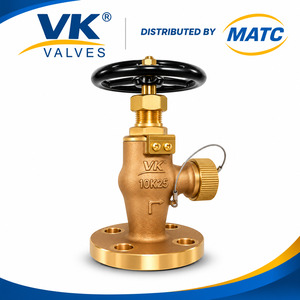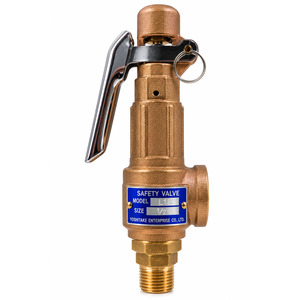
BRONZE SAFETY WITH LEVER
Bronze (Gunmetal) Safety Valve with Lever – Spring-Loaded Pressure Relief Valve
Mustafa Ashqar Trading L.L.C. (MATC), Dubai, UAE supplies Bronze (Gunmetal) Safety Valves with Manual Lifting Lever, designed to provide automatic overpressure protection for compatible industrial pressure systems, compressed-air installations, pressure vessels, steam equipment and mechanical utility applications.
A bronze safety valve with lever is a spring-loaded pressure-relief device that opens automatically when the system pressure reaches its calibrated set pressure, allowing excess pressure to discharge through the valve outlet.
The distinguishing feature is its manual lifting lever, which allows authorized personnel to lift the valve disc for functional testing under conditions specified by the manufacturer and applicable safety regulations.
These valves are commonly considered for industrial boilers, compressed-air receivers, steam lines, pressure vessels, marine auxiliary equipment and other pressure systems, provided the selected model carries the appropriate approvals for its intended service.
💥 Set Pressure Options
10 bar
1.0 MPa
16 bar
1.6 MPa
20 bar
2.0 MPa
These are requested set-pressure variants, subject to manufacturer availability and certification. Set pressure is not the same as the valve body’s pressure rating or its certified relieving capacity.
📏 Available Sizes – Complete Enquiry Range
| Nominal Size | DN Equivalent | Connection |
|---|---|---|
| 1/4″ | DN8 | Screwed |
| 3/8″ | DN10 | Screwed |
| 1/2″ | DN15 | Screwed |
| 3/4″ | DN20 | Screwed |
| 1″ | DN25 | Screwed |
| 1-1/4″ | DN32 | Screwed |
| 1-1/2″ | DN40 | Screwed |
| 2″ | DN50 | Screwed |
| 2-1/2″ | DN65 | Model-dependent |
| 3″ | DN80 | Model-dependent |
| 4″ | DN100 | Model-dependent |
⚙️ Key Features & Characteristics
– Bronze / gunmetal body: Durable copper-alloy construction for compatible industrial pressure applications.
– Automatic spring-loaded operation: Responds to rising system pressure without external power.
– Manual lifting lever: Allows controlled functional testing when permitted by the manufacturer and applicable code.
– Calibrated set-pressure options: Available for enquiry at 10 bar, 16 bar and 20 bar.
– Automatic reseating: Returns toward the closed position as system pressure decreases to the specified reseating level.
– Precision spring mechanism: Provides calibrated opening characteristics within certified tolerances.
– Threaded connection options: Suitable for specified BSP or NPT piping arrangements.
– Metal or soft-seat options: Depending on operating medium and manufacturer design.
– Compact construction: Suitable for selected industrial equipment and pressure installations.
– Tamper-resistant calibration options: May include sealed adjustment arrangements.
📋 Typical Technical Specifications
Specification Details
Product Name Bronze Safety Valve with Lever
Supplier MATC – Dubai, UAE
Valve Type Spring-Loaded Safety / Pressure Relief Valve
Body Material Bronze / Gunmetal Copper Alloy
Possible Material Grades ASTM B62 / ASTM B61 or specified equivalent
Bonnet Material Bronze / Manufacturer-Specified
Disc Material Bronze / Stainless Steel / Specified Alloy
Spring Material Spring Steel / Stainless Steel
Seat Construction Metal-Seated / Soft-Seated
Lifting Mechanism Manual Test Lever
Set Pressure Options 10 / 16 / 20 bar, subject to availability
Set Pressure Calibration Factory / Authorized Calibration
Inlet Connection Screwed, model-dependent
Outlet Connection Manufacturer-Specified
Thread Options BSP / NPT, subject to manufacturer
Nominal Size Manufacturer-Specified
Certified Relieving Capacity Required for Selection
Blowdown / Reseating Manufacturer-Specified
Operating Temperature Manufacturer-Specified
Compatible Media As Certified for the Selected Model
Operation Automatic with Manual Test Lever
Applicable Standards Manufacturer- and Application-Specific
Primary Function Overpressure Protection
Important: Compliance with EN ISO 4126, ASME Section I, ASME Section VIII or other applicable requirements must be established for the exact valve and protected equipment. A lifting lever does not, by itself, establish boiler or steam-service certification.
🔄 How a Bronze Safety Valve with Lever Works
Conceptual diagram of a spring-loaded safety valve with lifting lever; not a certified sectional drawing.
1. Normal operation: The spring keeps the valve disc seated while system pressure remains below the opening threshold.
2. Pressure reaches the set point: Inlet pressure overcomes the spring preload, initiating valve opening.
3. Automatic discharge: The valve releases fluid to help limit further pressure rise. Relieving capacity depends on its certified design and operating conditions.
4. Pressure decreases: The disc reseats when pressure falls to the specified closing pressure.
5. Manual lever testing: Where permitted, trained personnel may operate the lifting lever under the manufacturer’s specified conditions to check disc movement. This does not replace calibrated bench testing or statutory inspection.
💪 Advantages of Bronze Safety Valves with Lever
– Automatic overpressure protection.
– Manual lifting lever for approved functional testing.
– Mechanical operation without external electricity.
– Durable bronze construction for compatible applications.
– Calibrated set-pressure options.
– Automatic reseating after pressure relief.
– Suitable for selected steam, air and industrial pressure systems.
– Can support inspection and maintenance procedures where required.
– Compact construction for specified equipment installations.
⚠️ Disadvantages & Technical Considerations
– Certified relieving capacity: The valve must be sized for the maximum credible overpressure scenario.
– Manual lifting safety: Operating the lever can release hot, pressurized or hazardous fluid. Testing must follow approved procedures.
– Steam and boiler approvals: Applicable codes may require specific construction, certification and test provisions.
– Set-pressure selection: Must be compatible with the protected equipment’s maximum allowable working pressure.
– Discharge backpressure: Outlet piping must not compromise valve performance.
– Material compatibility: Bronze, spring and seat materials must suit the operating medium.
– Periodic calibration: Inspection and testing intervals depend on the applicable regulations and service conditions.
– Not a control valve: Safety valves should not be used for routine pressure regulation.
– Unauthorized adjustment: Changes to spring settings can compromise equipment protection.
🏭 Common Applications
Industry / Application Typical Function
Compressed Air Receivers Automatic overpressure protection
Industrial Pressure Vessels Pressure relief
Steam Utility Systems Overpressure protection where certified
Industrial Boilers Safety protection where specifically approved
Air Compressors Pressure safety
Industrial Machinery Equipment pressure protection
Marine Auxiliary Equipment Pressure relief, subject to approvals
Industrial Heating Systems Protection of specified pressure equipment
General Utility Systems Automatic overpressure relief
Mechanical Pressure Installations Protection of compatible equipment
🔄 Bronze Safety Valve with Lever vs. Without Lever
Feature With Lever Without Lever
Automatic Pressure Relief Yes Yes
Spring-Loaded Operation Typically Typically
Manual Lifting Mechanism Yes No
Functional Lift Testing Where Permitted No External Lever
Enclosed Cap Design-Dependent Common
Pressure Setting Calibrated Calibrated
Certification Application-Specific Application-Specific
Main Function Overpressure Protection Overpressure Protection
🇦🇪 Why Choose MATC Bronze Safety Valves in Dubai?
Mustafa Ashqar Trading L.L.C. (MATC) is a Dubai-based stockist and supplier of industrial valves, pressure-control equipment, pipes, fittings, flanges and mechanical piping accessories.
We serve customers across the oil & gas, marine, petrochemical, HVAC, construction, water treatment and general industrial sectors.
Our Bronze Safety Valve with Lever category supports enquiries for industrial pressure-protection systems requiring a spring-loaded safety valve with an external manual lifting mechanism.
For an accurate quotation, specify the set pressure, inlet and outlet sizes, thread type, operating medium, temperature, required discharge capacity, applicable certification and quantity.