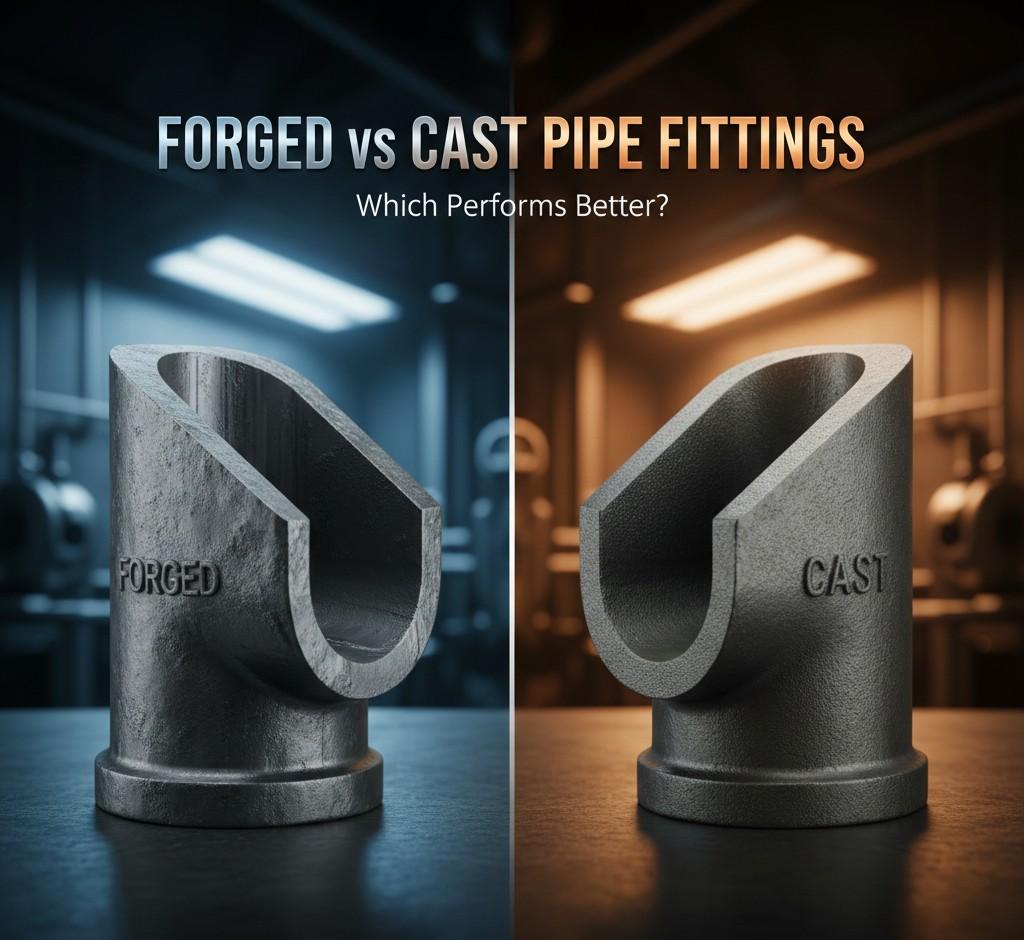
Choosing between forged and cast pipe fittings directly affects system safety, lifespan, and maintenance cost. Buyers in oil and gas, water treatment, power plants, and industrial fabrication often search this comparison to avoid failure risks and overspending. This guide explains performance, materials, standards, and buying criteria in clear practical terms so you can choose with confidence.
Understanding Pipe Fittings in Industrial Systems
Pipe fittings connect, redirect, or terminate piping systems. They must tolerate pressure, temperature, vibration, and corrosion based on the application.
Common Pipe Fitting Types
- Elbows for direction changes
• Tees and crosses for flow distribution
• Couplings and unions for joining pipes
• Reducers for diameter changes
• Flanges for bolted connections
Both forged and cast fittings are available across these categories, but their internal structure and performance differ significantly.
What Are Forged Pipe Fittings
Forged fittings are produced by heating metal billets and shaping them under high pressure. This process aligns the metal grain with the shape of the fitting.
Key Characteristics of Forged Fittings
- Dense and uniform grain structure
• High tensile and yield strength
• Excellent resistance to impact and fatigue
• Minimal internal defects
Forged fittings are commonly made from carbon steel, alloy steel, stainless steel, and duplex steel.
Typical Use Cases
- High pressure steam lines
• Oil and gas transmission
• Chemical processing plants
• Power generation systems
What Are Cast Pipe Fittings
Cast fittings are manufactured by pouring molten metal into molds where it solidifies into shape. This method allows complex geometries at lower cost.
Key Characteristics of Cast Fittings
- Suitable for complex shapes
• Lower production cost
• Wider material flexibility
• Potential for internal porosity
Cast fittings are often produced from cast iron, ductile iron, and some stainless steel grades.
Typical Use Cases
- Low pressure water lines
• Drainage and sewage systems
• HVAC systems
• Non critical industrial piping
Forged vs Cast Pipe Fittings Performance Comparison
Mechanical Strength
Forged fittings outperform cast fittings due to their refined grain structure. Cast fittings may contain micro voids that reduce load bearing capacity.
Pressure Handling
Forged fittings handle higher pressure ratings and sudden pressure spikes better. Cast fittings are suitable for steady low pressure conditions.
Temperature Resistance
Forged fittings maintain integrity under extreme heat or thermal cycling. Cast fittings can crack under rapid temperature changes.
Fatigue and Vibration Resistance
Forged fittings resist fatigue failure in vibrating systems. Cast fittings are more brittle and prone to cracking under cyclic stress.
Corrosion Resistance
Corrosion depends more on material grade and coating than manufacturing method. However forged fittings generally have fewer surface defects that trap corrosive agents.
Manufacturing Standards and Compliance
Buyers should always verify compliance with international standards.
Commonly Referenced Standards
- ASTM specifications for material composition
• ASME pressure and dimensional requirements
• ISO quality management certifications
Forged fittings are more commonly specified in high compliance industries due to consistent mechanical properties.
Cost vs Lifetime Value Analysis
| Criteria | Forged Fittings | Cast Fittings |
|---|---|---|
| Initial Cost | Higher | Lower |
| Service Life | Long | Moderate |
| Failure Risk | Very Low | Medium |
| Maintenance | Minimal | Periodic |
| Downtime Impact | Low | Potentially High |
While cast fittings appear cheaper upfront, forged fittings often deliver lower total cost of ownership in demanding systems.
Buyer Evaluation Criteria Before Purchase
Application Pressure and Temperature
High pressure or high temperature systems should prioritize forged fittings.
Media Type
Corrosive or hazardous fluids demand stronger fittings with fewer defects.
Regulatory Requirements
Some industries mandate forged fittings to meet safety regulations.
Supplier Reliability
Choose suppliers offering material test certificates, dimensional inspection reports, and traceability.
Warranty and Technical Support
Reliable manufacturers provide warranty coverage, installation guidance, and after sales technical support.
Supplier and Product Selection Guidance
When sourcing pipe fittings, buyers should look beyond price.
- Confirm material grade and heat treatment process
• Request hydrostatic or nondestructive testing reports
• Check availability of matching flanges and valves
• Ensure supplier stocks replacement fittings for future maintenance
When Cast Pipe Fittings Make Sense
Cast fittings remain a practical choice in specific scenarios.
- Low pressure non hazardous systems
• Budget constrained projects
• Complex shapes not requiring high strength
• Municipal water and drainage networks
They perform well when applied within design limits.
When Forged Pipe Fittings Are the Better Choice
Forged fittings are the preferred option when performance matters most.
- High pressure pipelines
• Safety critical installations
• Systems with vibration or thermal cycling
• Long term infrastructure projects
In these cases reliability outweighs initial cost.
Visual Content Suggestions
Image placement recommendation
• Diagram comparing forged grain flow vs cast structure under the performance comparison section
• Pressure rating chart image near buyer evaluation criteria
• Installation inspection image near supplier guidance
Frequently Asked Questions
Are forged pipe fittings stronger than cast fittings?
Yes forged fittings have aligned grain structure that provides higher strength and impact resistance.
Are cast fittings safe for industrial use?
They are safe for low pressure and non critical applications when used within rated limits.
Which fittings last longer forged or cast?
Forged fittings generally last longer due to lower defect rates and better fatigue resistance.
Are forged fittings worth the higher cost?
In high risk systems they reduce failure, downtime, and replacement costs making them cost effective long term.
How do I verify fitting quality before buying?
Request material certificates, pressure ratings, and compliance with ASTM and ASME standards.
Final Verdict Forged vs Cast Pipe Fittings
Forged pipe fittings deliver superior strength, durability, and safety for demanding applications. Cast fittings provide cost efficiency and design flexibility for low stress systems. The right choice depends on pressure, temperature, risk tolerance, and lifecycle cost rather than price alone.
Evaluating pressure ratings, environmental exposure, and lifecycle costs helps ensure safer operation and reduced maintenance over time. For high quality forged and cast pipe fittings that meet international standards, Mustafa Ashqar Trading LLC is a trusted supplier in the UAE.
Contact the technical solutions team today to get expert guidance and the right fittings for your industrial or commercial project.
Keep Reading to Know More
- Choosing the Right Camlock Material Aluminum vs Stainless Steel vs Brass: Compare materials for safety and durability.
- Difference Between EPDM and Natural Rubber Sheets: Key differences in performance and use.
- Comparison Galvanized vs Stainless Steel Pipe Fittings: Durability and corrosion resistance compared.
- Step by Step Guide to Flange Installation: Correct installation for leak free joints.
- Different Types of Rubber Sheets and Their Uses: Rubber sheet types and applications.