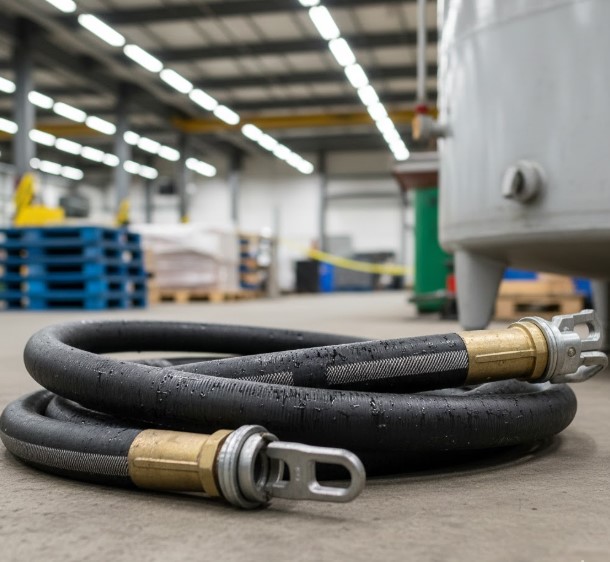
Choosing the wrong hose for an industrial application doesn’t just cause inconvenience, it can mean leaks, downtime, or a genuine safety hazard on site. In this guide, we break down the different types of industrial hose pipes, their uses, and why selecting the right one matters for performance and longevity.
What Is a Hose Pipe?
A hose pipe, or simply a hose, is a flexible tube used to transport liquids, gases, or fine solids from one location to another under pressure or flow conditions. Unlike rigid piping, hoses absorb vibration and movement, making them essential wherever equipment isn’t fixed in place.
Different Types of Hose Pipes
Understanding the different types of hose pipes is essential to select the right one for your application. Below are the most common industrial varieties.
Hydraulic Hoses
Hydraulic hoses are engineered for extremely high pressure fluid power applications such as heavy equipment and industrial presses, using multi-layer steel reinforcement rated to SAE International standards.
Key Features:
- Multi-layer steel wire reinforcement
- Rated for very high pressure spikes
- Built for continuous mechanical stress
Chemical Hoses
Chemical hoses withstand aggressive substances like acids, solvents, and fuels using fluoropolymer or nitrile liners that resist permeation and material breakdown, tested to ASTM International protocols.
Key Features:
- Specialized chemical-resistant inner liners
- Tested for permeation resistance
- Suited to hazardous environments
Suction Hoses
Suction hoses are built to handle negative pressure, pulling liquids from tanks, wells, or natural sources rather than just delivering them, using rigid helix wire reinforcement to prevent collapsing under vacuum.
Key Features:
- Withstands negative pressure without collapsing
- Essential for dewatering and tank transfer
- Common in construction and agriculture
Food Grade Hoses
Food grade hoses use non-toxic silicone or approved PVC to avoid contaminating consumable products, certified by NSF International and regulated by the FDA.
Key Features:
- Non-toxic, purity-tested materials
- NSF and FDA compliant
- Flexible without sacrificing sanitation standards
Choosing the Right Hose Type
Selecting the right hose depends on several factors:
- Application: Determine whether the hose needs to handle hydraulic pressure, chemical transfer, suction, or food-grade fluid.
- Material: Choose rubber, thermoplastic, or specialized liner materials based on chemical and temperature requirements.
- Pressure Rating: Match the hose’s burst strength to your system’s actual operating pressure, not just typical use.
- Reinforcement: Consider whether braided wire, textile plies, or helix wire construction fits your bend radius and pressure needs.
Pro Tip: For high-risk environments like chemical transfer or high-pressure hydraulics, always verify the hose meets the relevant SAE, ASTM, or ISO standard before installation.
Common Uses of Hose Pipes
Industrial hoses are used across a wide range of applications:
- Construction: Hydraulic systems for heavy machinery and equipment.
- Chemical Processing: Transferring acids, solvents, and industrial fluids safely.
- Agriculture: Suction and irrigation systems for water and drainage.
- Food and Beverage: Sanitary transfer of consumable liquids.
- Manufacturing: Compressed air delivery for tools and automated systems.
Maintenance Tips for Hose Pipes
Proper maintenance extends hose lifespan and prevents unexpected failure:
- Avoid Overpressure: Never exceed the hose’s rated pressure, even briefly.
- Proper Storage: Store hoses away from direct sunlight to prevent UV degradation.
- Inspect Regularly: Check for cracks, swelling, or wear before each use, especially on high-pressure or chemical lines.
- Check Fittings: Loose or damaged fittings are a common failure point separate from the hose itself.
- Replace Promptly: Swap out any assembly showing visible damage rather than waiting for full failure.
The Importance of Quality Hose Pipes
Investing in genuine, certified hose pipes offers real operational benefits:
- Durability: Quality hoses resist wear and abrasion, reducing replacement frequency.
- Efficiency: Reliable hoses maintain consistent flow, keeping operations on schedule.
- Safety: Properly rated hoses minimize the risk of bursts or leaks in high-pressure or hazardous applications.
- Cost-Effectiveness: Durable hoses cost more upfront but save money by avoiding repeated failures and downtime.
Conclusion
Understanding hose types, materials, and their specific applications is essential for safe, efficient operation in industrial and commercial settings. Selecting the right hose and maintaining it properly protects your equipment, your budget, and your team.
For businesses seeking dependable supply, technical compliance, and expert product guidance in the UAE, Mustafa Ashqar Trading LLC provides professional support and high quality industrial hose solutions for demanding commercial and industrial operations.
Contact our industrial hose specialists for expert selection guidance and customized fluid transfer solutions tailored to your application.
Keep Reading to Know More
- Rigid vs Flexible Couplings: What’s the Difference?: Choose the right power transmission solution.
- Forged vs Cast Pipe Fittings: Which Performs Better: Durability and applications compared.
- Choosing the Right Camlock Material: Aluminum vs stainless steel vs brass.
- Difference Between EPDM and Natural Rubber Sheets: Key differences in performance and use.
- Galvanized vs Stainless Steel Pipe Fittings: Durability and corrosion resistance compared.