Selecting the ideal camlock fitting material is critical for ensuring safety, efficiency, and longevity in fluid handling systems. From industrial plants to food and beverage processing, the right material impacts corrosion resistance, operational reliability, and maintenance costs.
Choosing the wrong material can lead to leaks, contamination, or frequent replacements, affecting both productivity and safety. Understanding the differences between aluminum camlocks, stainless steel camlocks, and brass camlocks allows engineers and facility managers to match fittings to the specific requirements of their applications.
This guide provides practical insights based on real-world experience, helping you make an informed decision for your industrial camlocks.
Understanding Camlock Fittings and Their Importance
Camlock couplings are quick-connect fittings widely used for transferring liquids, powders, and chemicals in industrial settings. Their reliability depends on the material’s strength, chemical compatibility, and resistance to wear and corrosion.
Choosing an unsuitable material can lead to leaks, contamination, or frequent replacements, increasing operational downtime and maintenance costs. Practical experience shows that industries such as chemical manufacturing, oil and gas, and food processing prioritize material selection to match both environmental conditions and fluid properties.
For reliable and leak-free connections, it is important to use reliable camlock couplings designed for industrial fluid transfer. You can explore a full range of heavy-duty to match different pipe sizes and operational needs for safe, quick connections.
Aluminum Camlocks: Lightweight and Cost-Effective
Aluminum camlocks are known for their lightweight construction, making them easy to handle during installation and frequent disconnections. They are highly resistant to corrosion, thanks to a naturally forming oxide layer, which protects them in moderate industrial environments.
Aluminum camlocks are ideal for low to medium pressure applications, including water transfer, irrigation, and non-corrosive chemical handling. For example, construction companies often use aluminum camlocks for temporary water supply lines because the fittings are easy to transport and install on-site.
For applications requiring lightweight handling and fast installation, many contractors prefer dedicated Aluminium camlocks that are easy to transport and ideal for water transfer, irrigation, and temporary pipeline setups.
Advantages of Aluminum Camlocks
- High strength-to-weight ratio for easy handling
- Good corrosion resistance for moderate exposure
- Affordable and widely available
Limitations
- Less durable under high-pressure conditions
- Susceptible to galvanic corrosion when paired with dissimilar metals
Aluminum camlocks are excellent for projects where cost efficiency and portability are prioritized without compromising operational safety.
Stainless Steel Camlocks: Strength and Longevity
For demanding applications, stainless steel camlocks are the preferred choice. They offer exceptional durability, superior corrosion resistance, and can withstand high temperatures and pressures. This makes them ideal for chemical processing, food-grade applications, and petroleum industries.
Stainless steel camlocks are particularly favored in sanitary environments due to their ability to resist contamination. In real-world usage, breweries and dairy plants often rely on stainless steel fittings to maintain strict hygiene standards while transferring liquids.
For chemical processing, food-grade transfer, and high-pressure systems, engineers rely on premium stainless steel camlocks that offer superior strength, hygiene compliance, and extended service life.
Advantages of Stainless Steel Camlocks
- Excellent resistance to corrosion and chemical exposure
- Suitable for high-pressure and high-temperature systems
- Long operational lifespan reducing replacement frequency
Limitations
- Heavier than aluminum, requiring careful handling
- Higher upfront cost compared to aluminum and brass
Investing in stainless steel camlocks ensures reliability and minimal downtime, which offsets the initial expense over time.
Brass Camlocks: Durable and Versatile
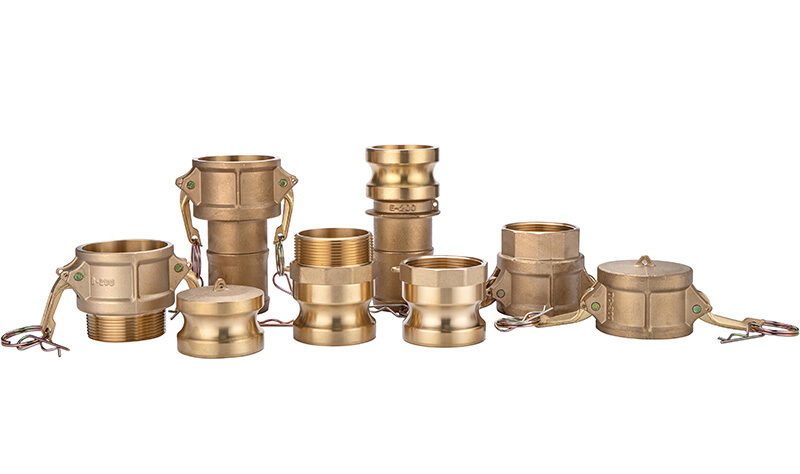
Brass camlocks offer a balance between aluminum and stainless steel in terms of strength and corrosion resistance. They are particularly suited for water, fuel, and oil transfer applications. The material’s natural antimicrobial properties make it a practical choice for potable water systems.
Brass camlocks are widely used in industries such as agriculture, automotive, and general manufacturing, where moderate pressure handling and chemical resistance are sufficient.
When dealing with fuel, oil, or potable water lines, selecting corrosion-resistant Brass camlocks ensures dependable sealing and long-term durability in medium-pressure environments.
Advantages of Brass Camlocks
- Reliable durability for medium-duty applications
- Good resistance to corrosion and chemical attack
- Suitable for potable water and fuel handling
Limitations
- Heavier than aluminum, though lighter than stainless steel
- Not ideal for highly acidic or alkaline chemicals
Brass camlocks are a cost-effective alternative for applications where extreme strength or chemical resistance is not the primary concern.
Key Factors to Consider When Choosing Camlock Materials
Selecting the right camlock fitting material requires evaluating multiple factors beyond just cost. Consider the following:
- Fluid Type and Chemical Compatibility: Ensure the material is resistant to the specific fluid being transferred. For aggressive chemicals, stainless steel camlocks outperform aluminum and brass.
- Environmental Conditions: Outdoor installations or corrosive environments benefit from stainless steel or aluminum fittings, while indoor, controlled settings may allow for brass.
- Pressure and Temperature: High-pressure systems demand stainless steel camlocks, whereas low-pressure water transfer lines can safely use aluminum.
- Budget and Lifecycle Costs: While aluminum offers lower upfront costs, stainless steel reduces long-term replacement expenses. Brass fits comfortably in a mid-range budget scenario.
- Maintenance and Handling: Lightweight aluminum camlocks reduce installation effort, while stainless steel requires careful handling due to weight.
Real-World Applications
- Aluminum Camlocks: Temporary water supply lines in construction, irrigation systems, non-corrosive chemical transfer.
- Stainless Steel Camlocks: Dairy and beverage processing plants, chemical manufacturing, petroleum handling.
- Brass Camlocks: Fuel stations, automotive workshops, potable water pipelines.
Industry experience highlights that matching the camlock material with its specific operational environment significantly extends the fitting’s lifespan and reduces downtime.
AI Overview
Choosing the right camlock material ensures maximum durability, chemical resistance, and efficiency. Compare aluminum, stainless steel, and brass camlocks for industrial and fluid handling needs.
FAQs
Which is better brass or aluminium?
Brass is more durable and corrosion-resistant than aluminum, making it ideal for medium-duty applications. Aluminum is lighter and cost-effective for low-pressure systems.
Is brass or stainless steel better for locks?
Stainless steel outperforms brass in strength, corrosion resistance, and longevity, making it ideal for high-pressure and industrial applications.
Which is better brass or stainless steel?
Stainless steel offers superior durability, chemical resistance, and lifespan, while brass is suitable for moderate applications at a lower cost.
Which is better brass or aluminum hose?
Aluminum hoses are lightweight and easy to handle, while brass hoses provide higher durability and better corrosion resistance for long-term use.
Conclusion
Selecting the right camlock material is key for safety, efficiency, and longevity: aluminum is lightweight and cost-effective for low-pressure use, stainless steel offers superior durability and corrosion resistance for industrial or sanitary applications, and brass provides a versatile option for water, fuel, or oil transfer.
Assess your application’s pressure, chemical exposure, and budget to determine the optimal material. Making the right choice reduces downtime, maintenance costs, and ensures reliable operation across all industries. If you’re looking for high-quality camlock fittings, Mustafa Ashqar Trading LLC is your trusted supplier in the UAE.
Contact pipe fitting experts today to get durable, high-performance products tailored to your industrial and commercial projects.
Read More Experts Insights
Explore expert articles on pipe fittings, valves, and industrial materials to help you choose the right solutions for your next project in UAE.
- Different Types of Rubber Sheets and Their Uses: Helps understand sealing materials used to prevent leakage in flange joints.
- Comparison: Galvanized vs Stainless Steel Pipe Fittings: Galvanized vs SS pipe fittings: durability, strength, and performance.
- Different Types of Flanges and Their Uses: Provides insight into flange selection before installation and tightening.
- Difference Between EPDM and Natural Rubber Sheets: Compares pipe types to ensure correct flange compatibility and performance.
- Step-by-Step Guide to Flange Installation: Flange installation: easy, safe, and precise fitting every time.